
Il a fait chaud cette semaine, un peu trop à mon goût. C’est aussi pour cela que j’ai choisi de débuter ma résidence en septembre, les étés chauds et humides, comme ceux que j’ai connus à New York, sont trop peu confortables à mon goût.
Lectures de la semaine
J’ai passé beaucoup de temps à lire cette semaine, Françoise d’Eaubonne et Silvia Federici entre autres, et à parcourir des livres photos.
J’ai récemment acheté le livre de Dorian Prost In South Korea, un livre aux tons pastels qui apporte une autre vision de la Corée, même si mon livre photo préféré sur la Corée reste celui de Françoise Hugier Virtual Seoul. J’ai aussi découvert le projet fascinant de Bieke Depoorter sur ses séjours en Égypte (elle passait une nuit avec des familles qu’elle photographiait, et y est retournée ensuite pour demander à des passants de commenter les photos). Et puis il y a l’Atlas en mouvement de Mathieu Pernot sur les migrants. Un autre photographe français installé en Corée dont j’ai beaucoup aimé le projet est Tim Franco sur les transfuges nord-coréens.
L’univers des K-dramas
Mais cette semaine, j’aimerais surtout parler des K-dramas. J’ai souvent discuté avec Jocelyne de leur “effet addictif” et je me souviens de ma conversation avec Annie sur le fait qu’il y avait quelque chose dans les scénarios qui les rendaient uniques, singuliers, sans qu’on sache vraiment quoi.
Aussi, j’ai repris mes notes sur deux livres qui portent sur le sujet : Les K-dramas, ces séries qui font du bien de Vincenzo Cicchelli et Sylvie Octobre, et K-dramas : et la Corée créa l’homme fatal de Marie Joncquez.
Si Marie Joncquez se focalise sur l’inversion du regard et la figure de l’homme idéal (je ne suis pas toujours d’accord avec sa vision de la société coréenne, mais je ne suis pas experte), les deux livres mettent en avant des caractéristiques récurrentes des séries coréennes : humour, romance, strates narratives et esthétique (sens du détail) – ce que beaucoup d’entre vous ont noté également – que Vincenzo Cicchelli et Sylvie Octobre résument dans la combinaison du jeong(sollicitude), du han (mélancolie profonde) et du heung (joie spontanée, humour). Il y a aussi une mise en action assez lente, qui laisse le temps à l’émotion de s’installer.
La narration des liens
Je trouve l’approche de Vincenzo Cicchelli et Sylvie Octobre particulièrement intéressante dans le fait qu’ils focalisent leur analyse sur la “narration des liens”, et le choix des scénaristes de privilégier “la recomposition des liens à leur dissolution”.
Je n’ai pas vu énormément de séries, mais effectivement, en y repensant, je n’ai pas souvenir de scénarios où les protagonistes préféraient couper les ponts avec leur entourage.
Ainsi, selon les auteurs : “Les K-dramas font vivre le rêve, par fiction interposée, d’une fabrique d’un lien humanisé où les personnages s’évertuent à reformuler leurs attaches par la transformation d’eux-mêmes et de leurs homologues plutôt qu’à rompre les liens ou à abandonner une relation au profit d’une autre.”
Se dégage ainsi des K-dramas une impression de sincérité (de pureté comme noté par certaines d’entre vous) plutôt qu’une authenticité focalisée sur la réalisation de l’individu pour soi et par soi.
Scènes cultes et female gaze
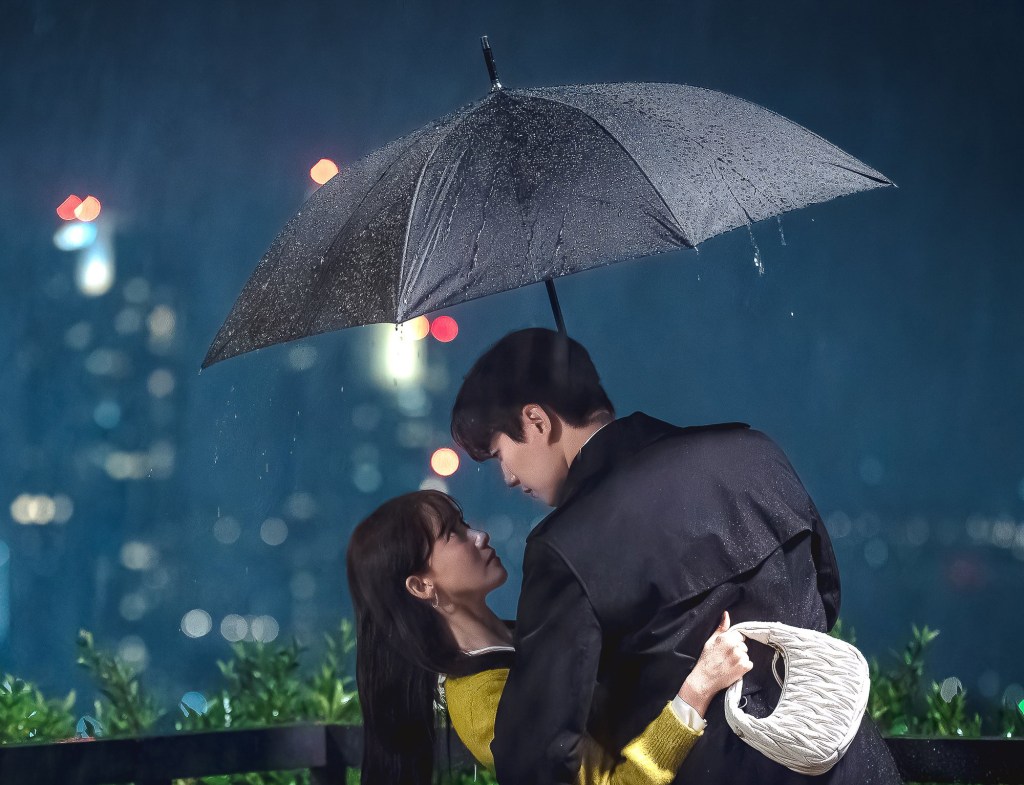
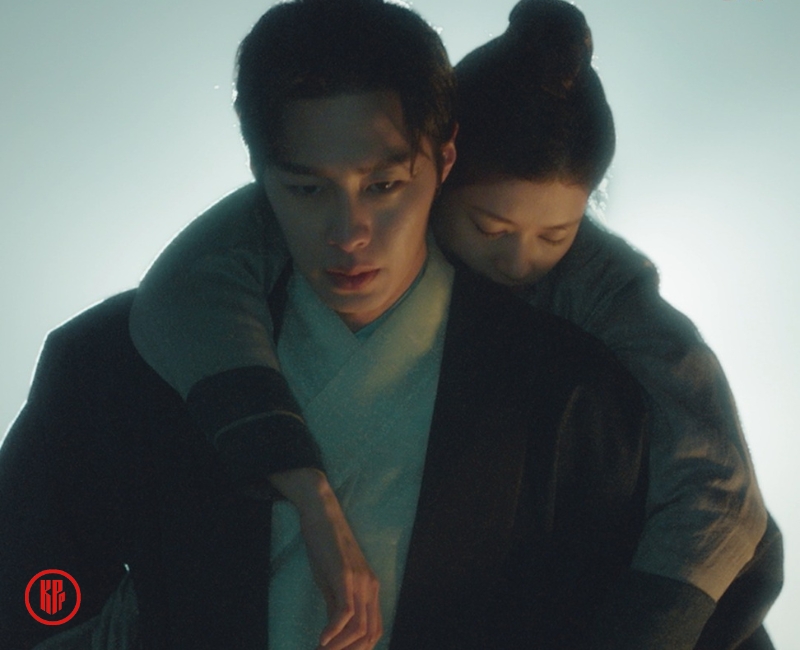
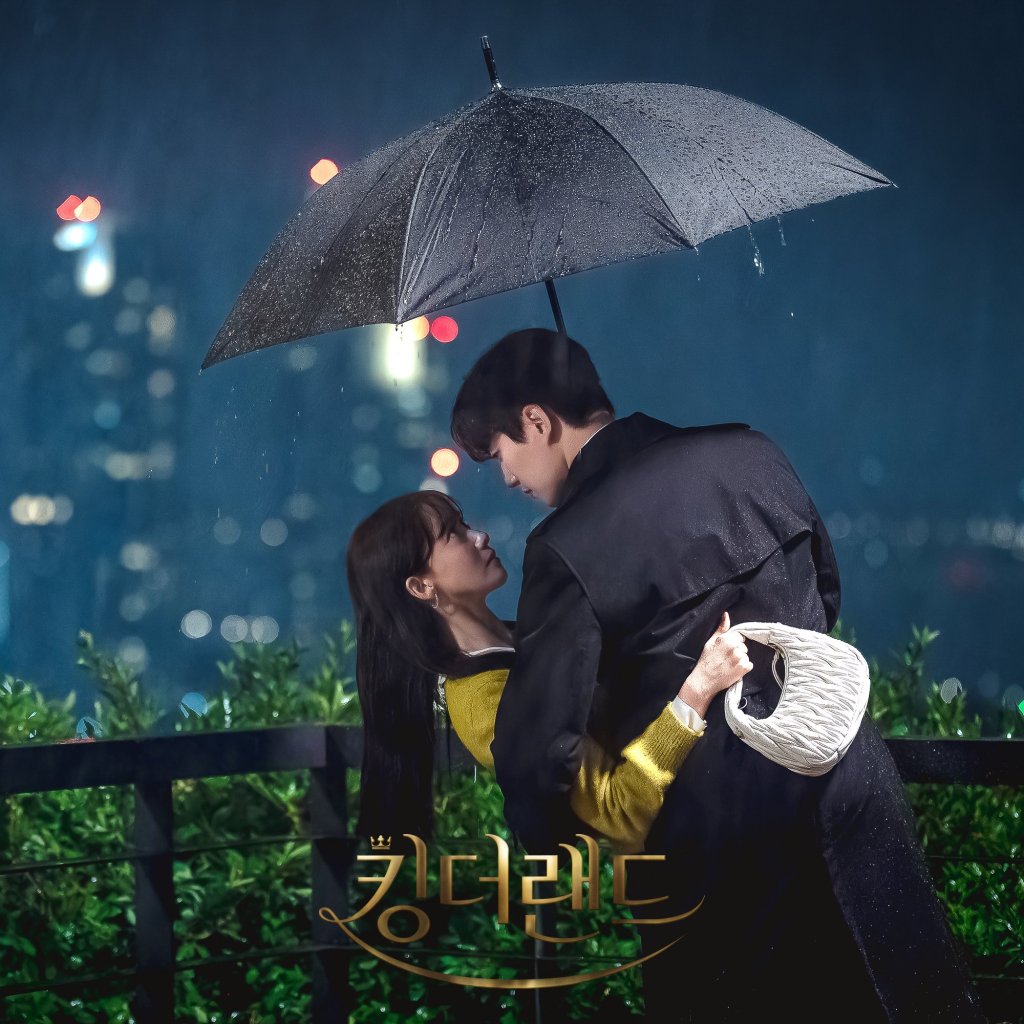
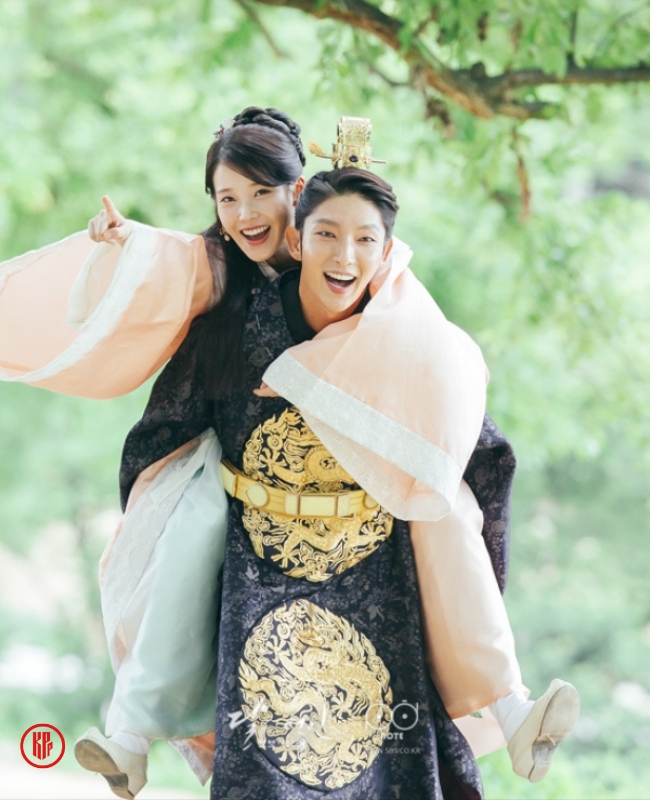
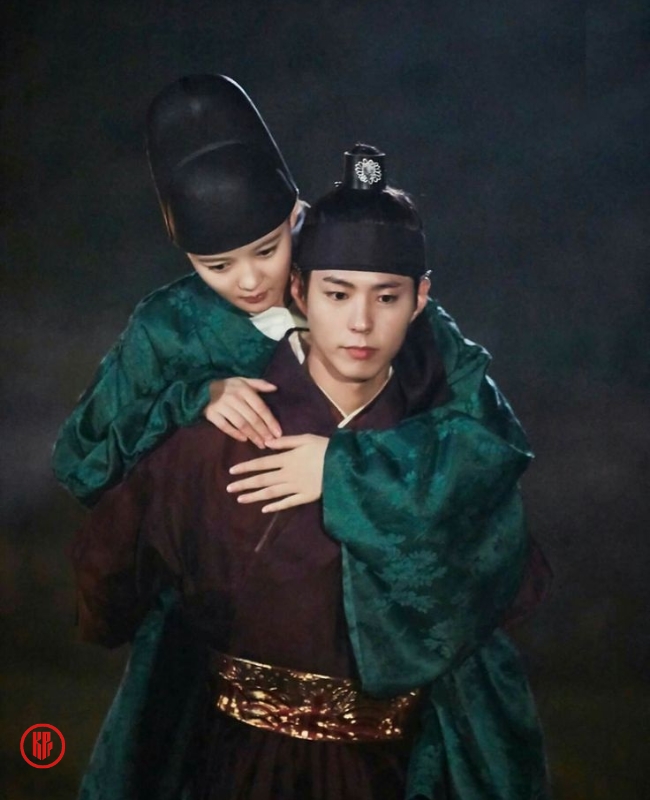
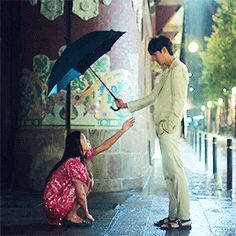
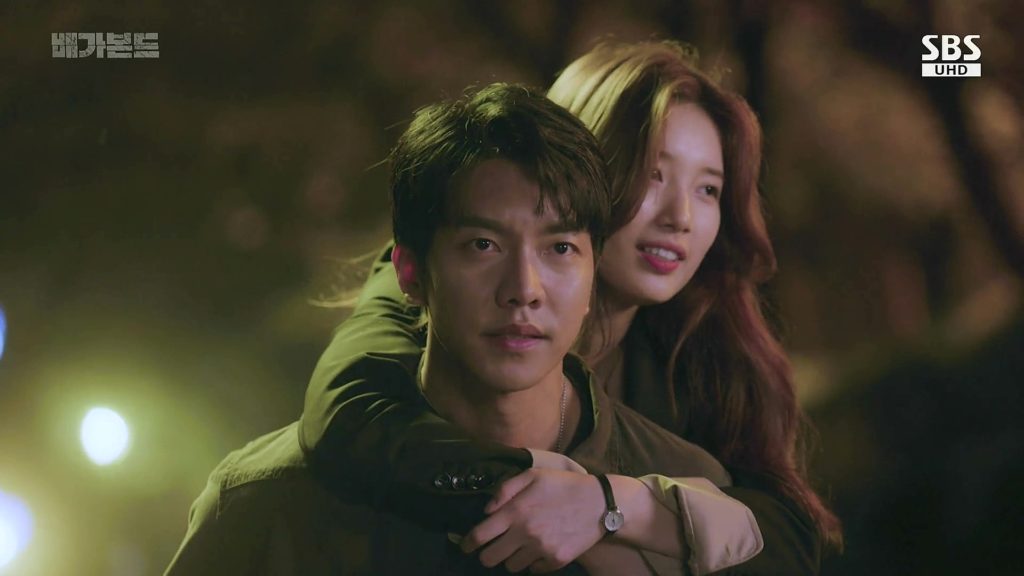
Ce que ces lectures m’ont aussi apporté, c’est la mise en avant des scènes récurrentes auxquelles je n’avais pas prêté attention : les scènes du parapluie, du tapotage sur l’épaule pour réconforter, du back hug, de saisir le poignet de quelqu’un qui s’en va, du baiser (selon Marie Joncquez toujours au cours du 6ème épisode), et puis il y a la scène d’ivresse (souvent des femmes d’ailleurs) et du piggy back ride qui s’ensuit, et enfin l’homme sous la douche ou torse nu.
Ce n’est qu’après ces lectures que j’ai remarqué ces scènes où l’homme marche en slow motion pour qu’on puisse l’admirer dans toute sa splendeur. Avant ma conversation avec Sylvie Octobre, je n’avais pas réalisé cet aspect crucial du “female gaze” dans les K-dramas, où les hommes sont filmés comme on filmerait le corps des femmes en Occident.
Cette inversion du regard est peut-être l’une des clés pour comprendre pourquoi ces séries touchent particulièrement les femmes.
Du coup, cette semaine, j’ai fait des recherches en ligne sur ces scènes “cultes”. J’ai été frappée de voir à quel point ces codes visuels sont récurrents et assumés.
N’hésitez pas à partager vos commentaires et vos scènes culte !
À la semaine prochaine.
******
Week 33 – K-dramas, a gateway to a certain vision of Korea
It was hot this week, a little too hot for my liking. That’s also why I chose to start my residency in September; hot, humid summers, like the ones I experienced in New York, are too uncomfortable for my taste.
Readings of the week
I spent a lot of time reading this week, Françoise d’Eaubonne and Silvia Federici among others, and browsing through photo books.
I recently bought Dorian Prost’s book In South Korea, a pastel-toned book that offers another view of Korea, although my favorite photo book on Korea remains Françoise Hugier’s Virtual Seoul. I also discovered Bieke Depoorter’s fascinating project about her stays in Egypt (she spent a night with families she photographed and then returned to ask passersby to comment on the photos). And then there is Mathieu Pernot’s Atlas en mouvement on migrants. Another French photographer based in Korea whose project I really liked is Tim Franco on North Korean defectors.
The world of K-dramas
But this week, I’d like to talk about K-dramas. I’ve often discussed their “addictive effect” with Jocelyne, and I remember talking with Annie about how there was something about the storylines that made them unique and special, without really knowing what it was.
So, I went back to my notes on two books on the subject: Les K-dramas, ces séries qui font du bien (K-dramas, the series that do you good) by Vincenzo Cicchelli and Sylvie Octobre, and K-dramas: et la Corée créa l’homme fatal (K-dramas: and Korea created the ideal man) by Marie Joncquez.
While Marie Joncquez focuses on the reversal of the gaze and the figure of the ideal man (I don’t always agree with her view of Korean society, but I’m no expert), both books highlight recurring characteristics of Korean series: humor, romance, narrative layers, and aesthetics (attention to detail)—which many of you have also noted—which Vincenzo Cicchelli and Sylvie Octobre summarize as a combination of jeong (solicitude), han (deep melancholy), and heung (spontaneous joy, humor). There is also a fairly slow pace, which allows time for emotions to settle in.
The narration of relationships
I find Vincenzo Cicchelli and Sylvie Octobre’s approach particularly interesting in that they focus their analysis on the “narration of relationships” and the screenwriters’ choice to prioritize “the rebuilding of relationships over their dissolution.”
I haven’t seen a lot of series, but thinking back, I can’t remember any scenarios where the protagonists preferred to cut ties with those around them.
According to the authors: “K-dramas bring to life the dream, through fiction, of creating a humanized bond where the characters strive to reformulate their attachments by transforming themselves and their counterparts rather than breaking ties or abandoning one relationship in favor of another.”
K-dramas thus give off an impression of sincerity (or purity, as some of you have mentioned) rather than an authenticity focused on the individual’s self-realization for and by themselves.
Cult scenes and female gaze
What these readings also brought to my attention were recurring scenes that I hadn’t noticed before: scenes involving umbrellas, comforting pats on the shoulder, back hugs, grabbing the wrist of someone who is leaving, kissing (according to Marie Joncquez, usually during the 6th episode), and then there’s the drunk scene (often women) and the piggyback ride that follows, and finally the man in the shower or shirtless.
It was only after reading these books that I noticed these scenes where the man walks in slow motion so that we can admire him in all his glory. Before my conversation with Sylvie Octobre, I hadn’t realized this crucial aspect of the “female gaze” in K-dramas, where men are filmed in the same way that women’s bodies are filmed in the western series.
This reversal of the gaze is perhaps one of the keys to understanding why these series particularly appeal to women.
This week, I did some online research on these “cult” scenes. I was struck by how recurrent these visual codes are.
Feel free to share your comments and your cult scenes!
See you next week.


 Korean_Puzzle
Leave a comment