
J’ai du mal à me souvenir de tout ce que j’ai fait cette semaine tant elle a été dense : entre visites d’exposition à Busan et périple à Daegu-Gyeongju-Pohang, j’ai l’impression d’avoir traversé plusieurs Corées différentes.
Début de semaine tranquille à l’atelier où je réécoute les différents entretiens réalisés avec les femmes rencontrées avant de partir. Cette matière sonore prend une résonance particulière ici, et me fais réfléchir aux images qui pourraient accompagner ces réflexions.
Immersion culturelle à Busan
Mardi, visite de la galerie Kukje de Busan et de l’espace d’exposition F1963 où se produit actuellement un duo d’artistes français. Puis direction le Busan Museum of Modern and Contemporary Art, installé dans une ancienne banque près du marché de poisson de Jalgachi et le Busan Tower. L’exposition “Next Together” met en scène des duos d’artistes émergents. Nous discutons avec une des artistes après la visite. Nous nous étonnons qu’il n’y ait pas de vernissages ouverts au public comme en Europe. Apparemment les vernissages se font sur invitation, les galeries donnant priorité à leurs fidèles clients et collectionneurs.
Mercredi, déjeuner face à la plage de Songjeong avec les autres résidents et Anna qui dirige le lieu, puis dîner typiquement coréen juste en dessous de la résidence. Rien de tel que de découvrir la cuisine coréenne avec des locaux.
Découverte de Daegu
Jeudi, départ pour Daegu où C. me rejoint dans la soirée. Après-midi à déambuler dans le quartier de Dongseong-ro, rues commerçantes sans grand intérêt, à part la visite de la librairie Ghost Books recommandée par mon amie D.
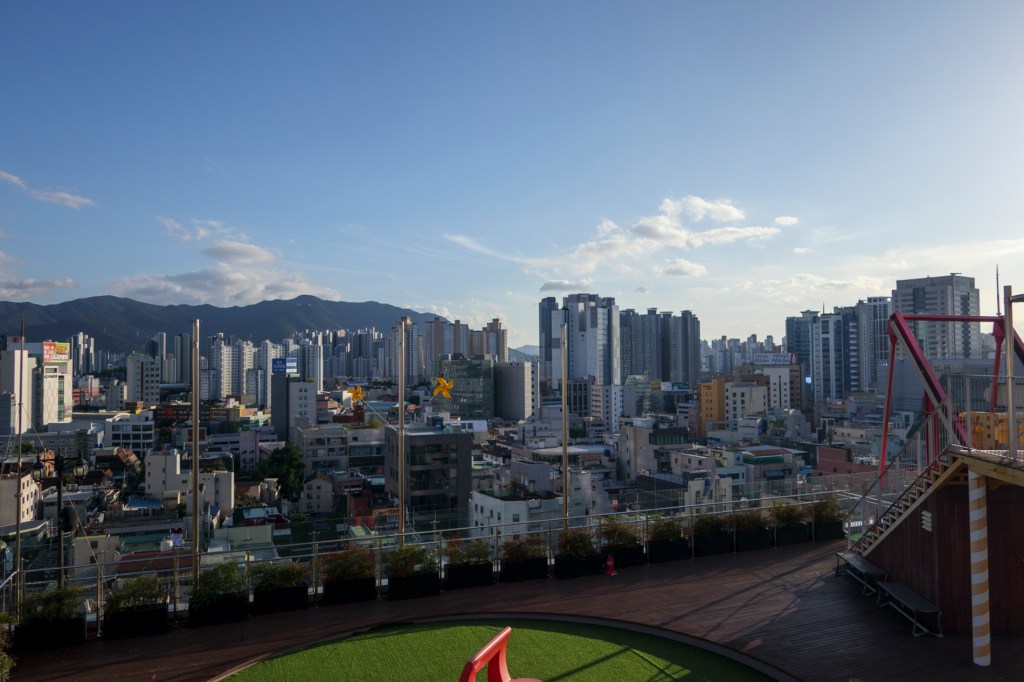
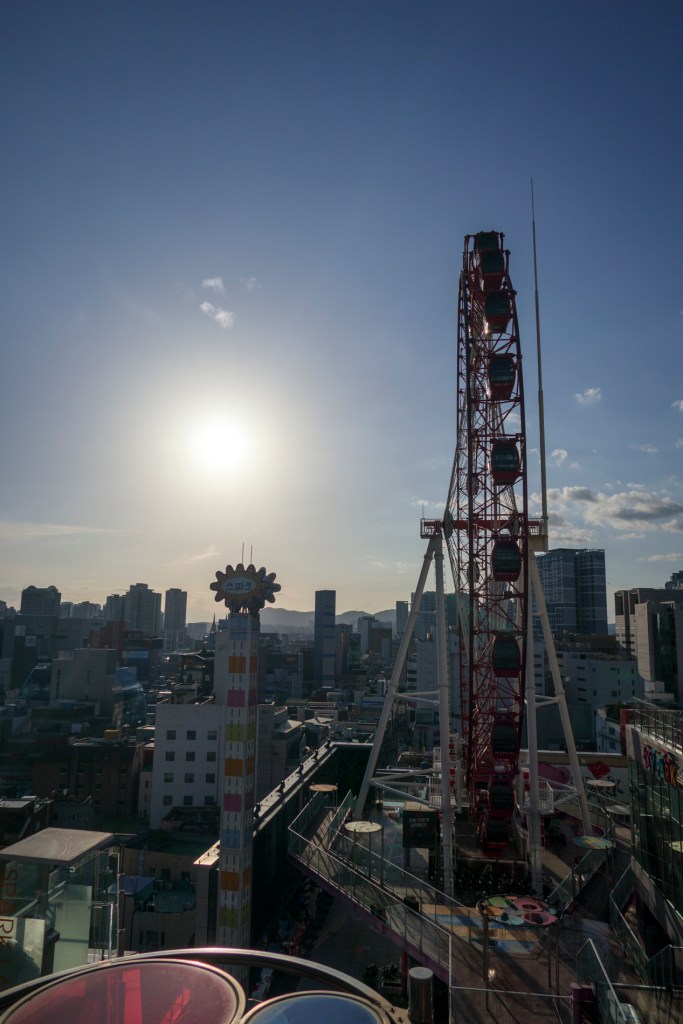
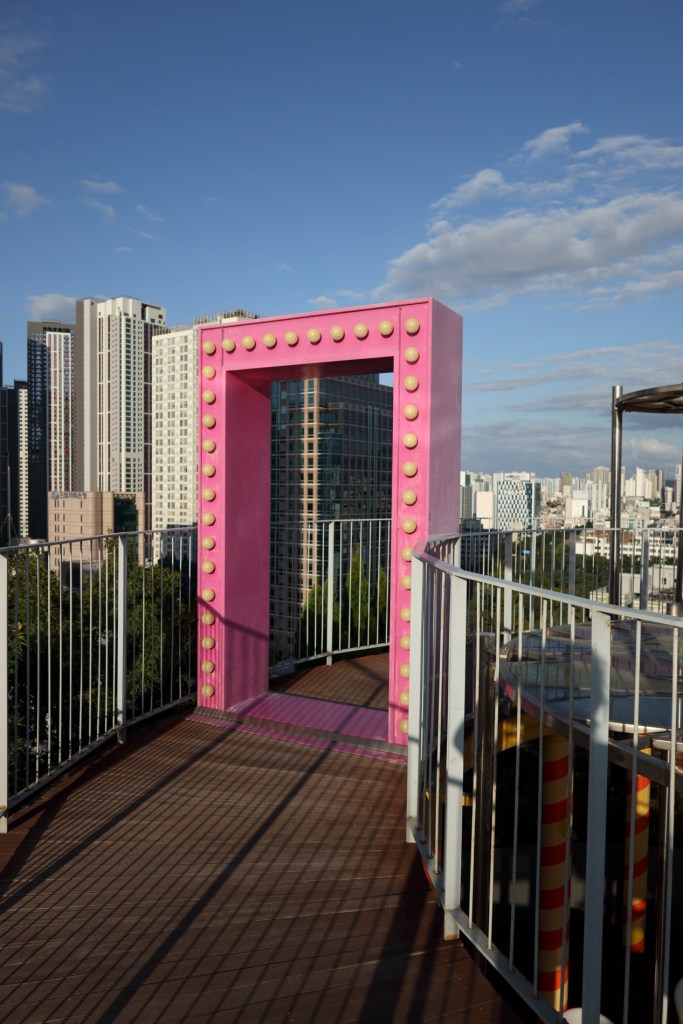
Moment surréaliste au Sparkland, parc d’attraction perché sur le toit d’un immeuble en plein cœur de Daegu. Quasi désert en cette fin d’après-midi, il dégageait une mélancolie étrange – j’imagine qu’il prend vie à la nuit tombée.
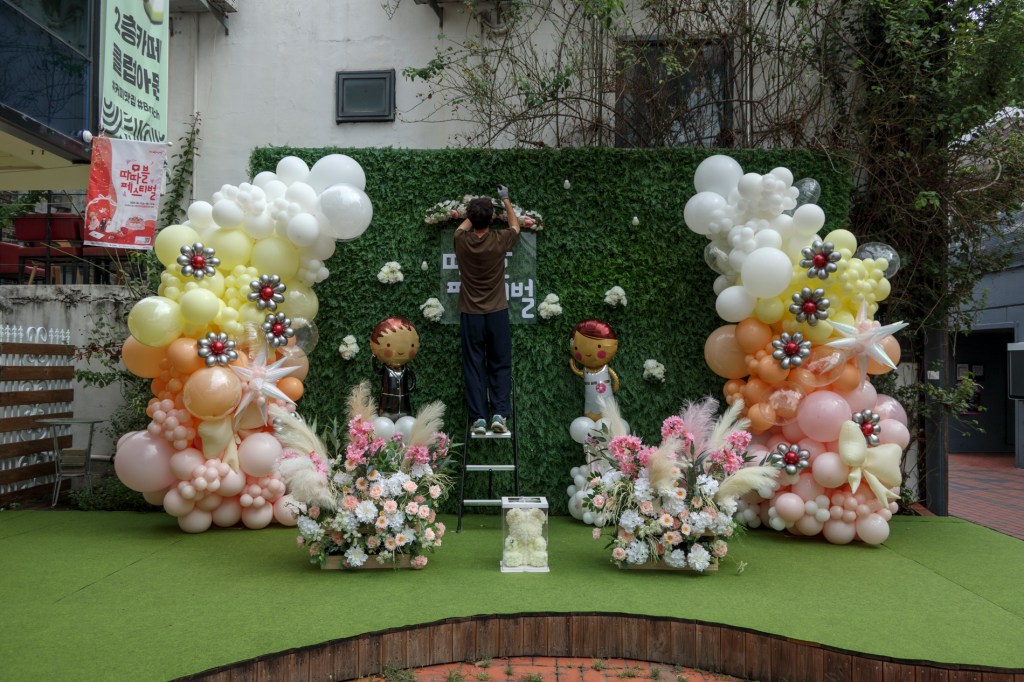
Le lendemain matin, exploration du quartier de Bangcheon Market et de la rue dédiée au chanteur Kim Kwang Seok, fréquentée majoritairement par des Coréens. Moment touchant : une équipe finalisant les arrangements floraux pour un mariage, ravie de notre intérêt, nous fait poser devant leur création.
Après un déjeuner somptueux chez 도도모, visite du Kansong Art Museum (collection privée avec de magnifiques pièces de calligraphie, céramique et peintures) puis du Daegu Art Museum et où je découvre l’artiste coréen Lee Kang So.
L’art dans la ville
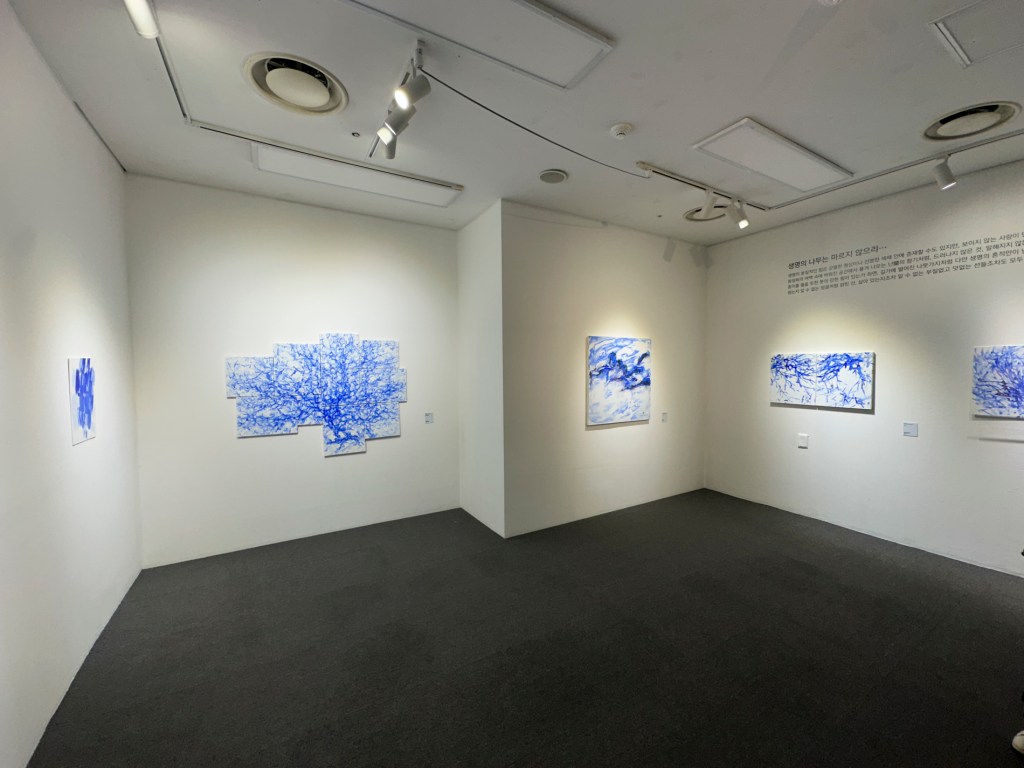
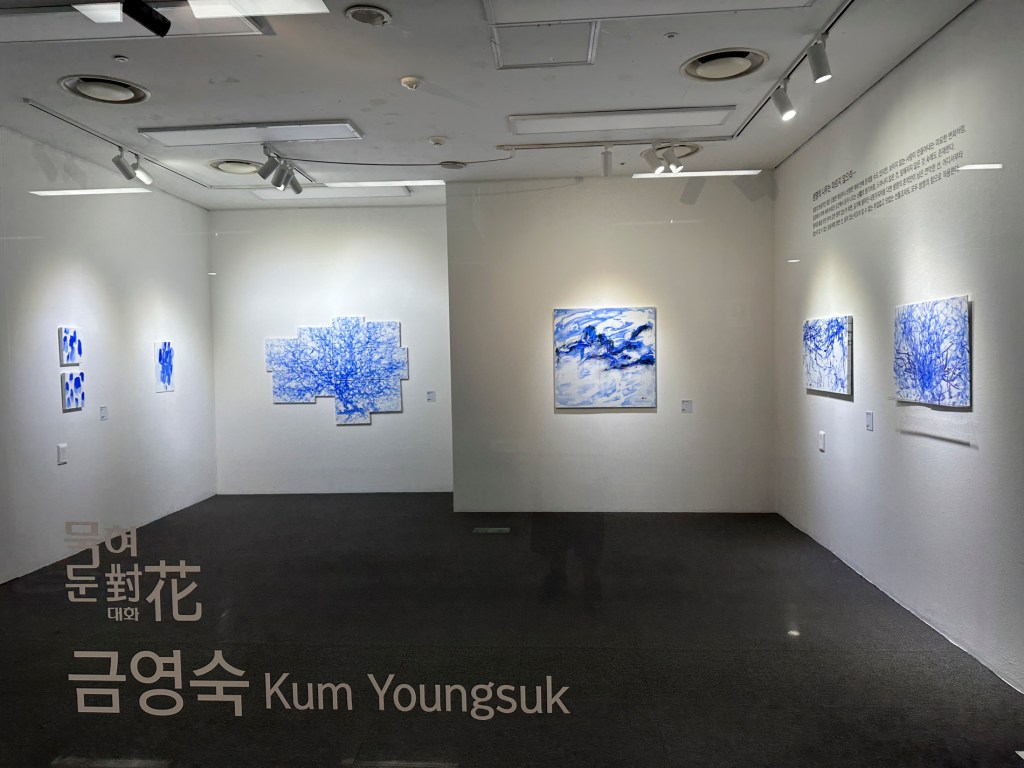
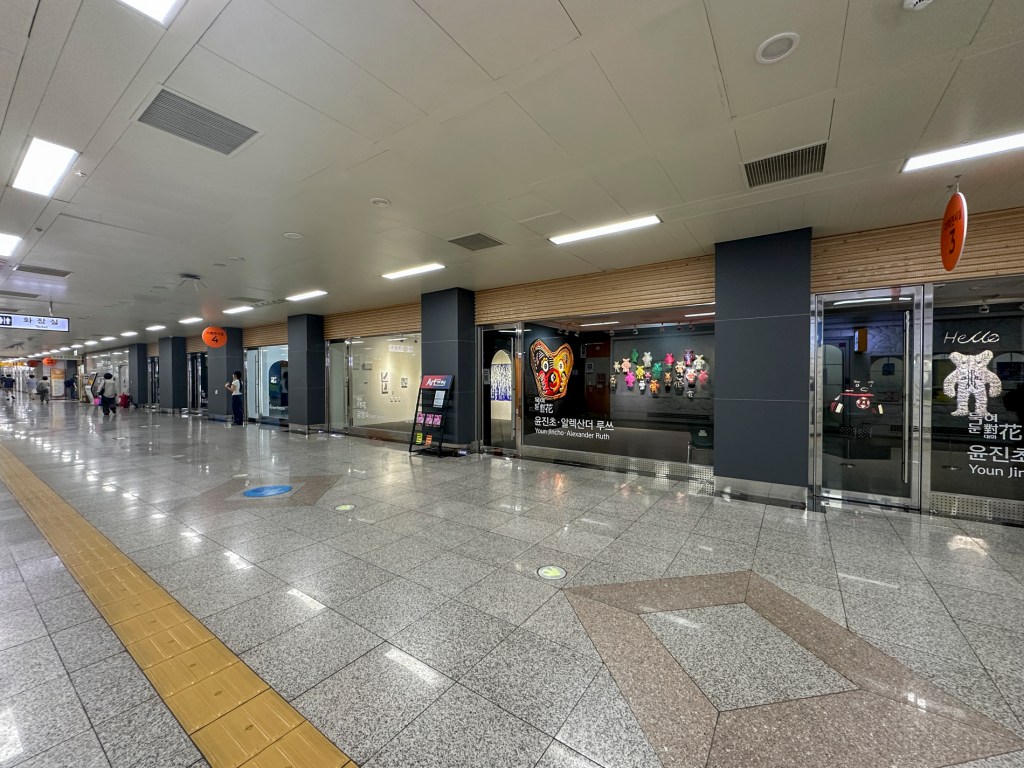
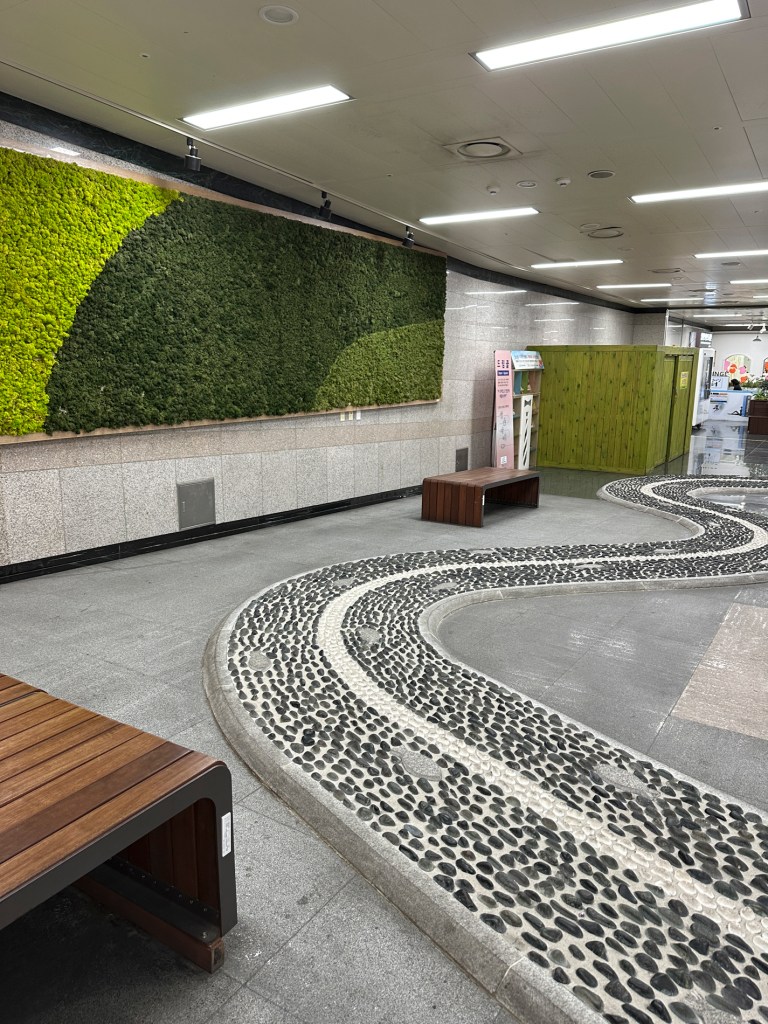
Découverte fascinante : dans le passage souterrain reliant le métro près du Daegu Grand Hotel, la mairie a aménagé des galeries pour présenter des artistes. À 19h, présentations des artistes – je fais office de figurante vu mon niveau de coréen ! Mais j’observe les passants t, notamment ceux qui marchent sur le chemin de galets aménagé en plein cœur de la galerie. Métro – art – promenade de santé : un beau trio très coréen.
Après les présentations, dîner dans un restaurant spécialisé dans le 감자탕 (ragoût d’épines de porc) – délicieux et réconfortant.
Gyeongju, entre tradition et tourisme
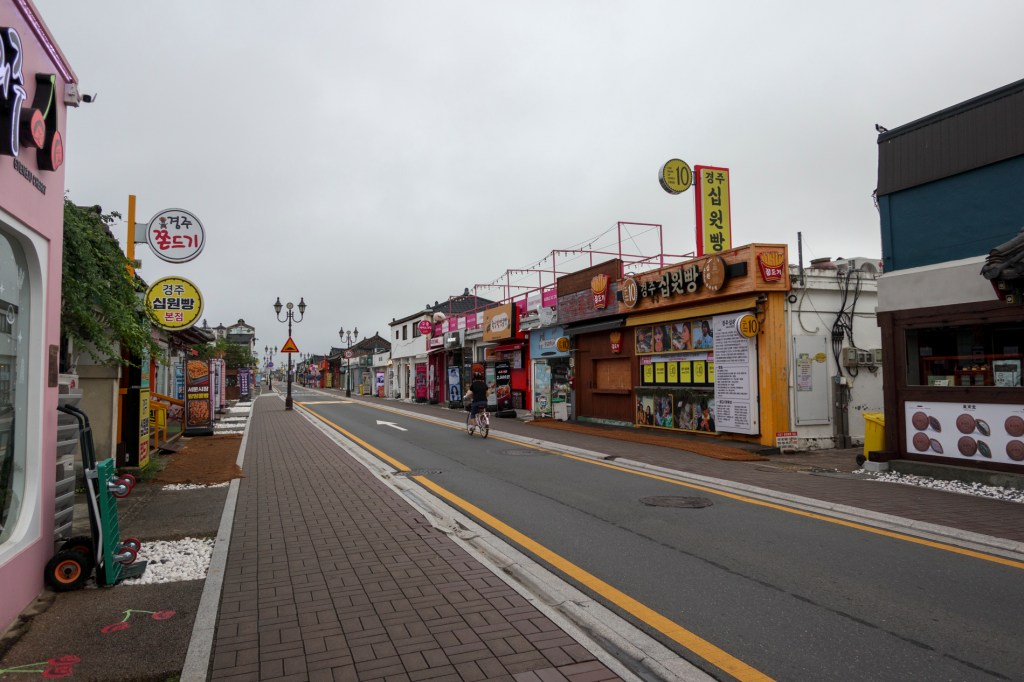
Samedi, récupération de la voiture au parking Lotte et départ pour Gyeongju. Arrivée laborieuse : je n’avais pas réalisé que nous serions samedi dans une ville hyper-touristique ! Galère pour se garer avant de rejoindre notre hanok au centre-ville, dans une toute petite rue.
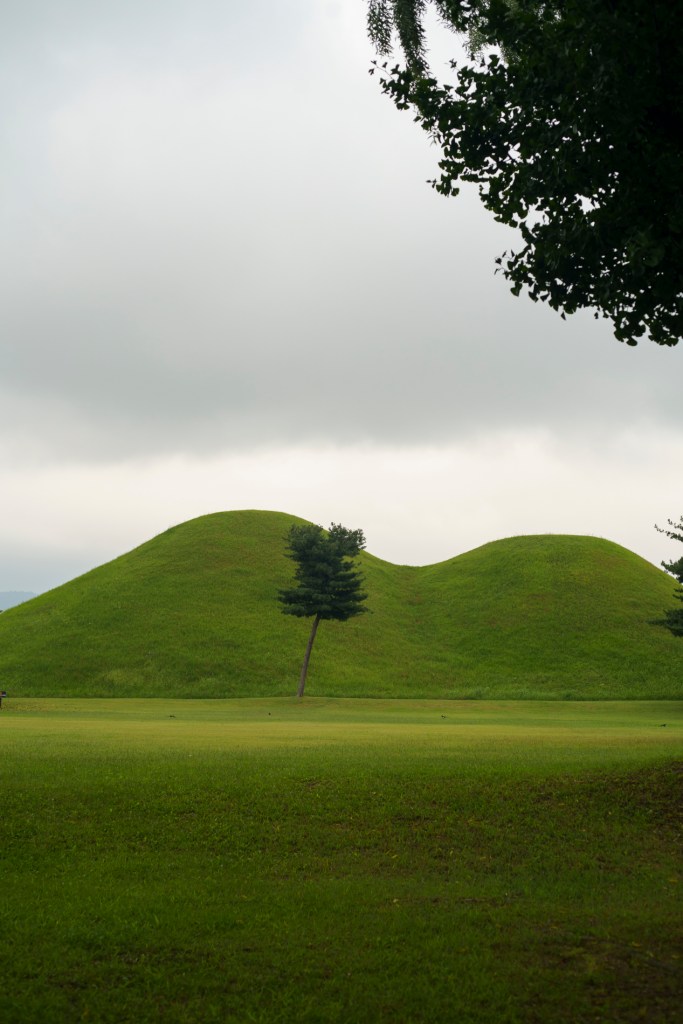
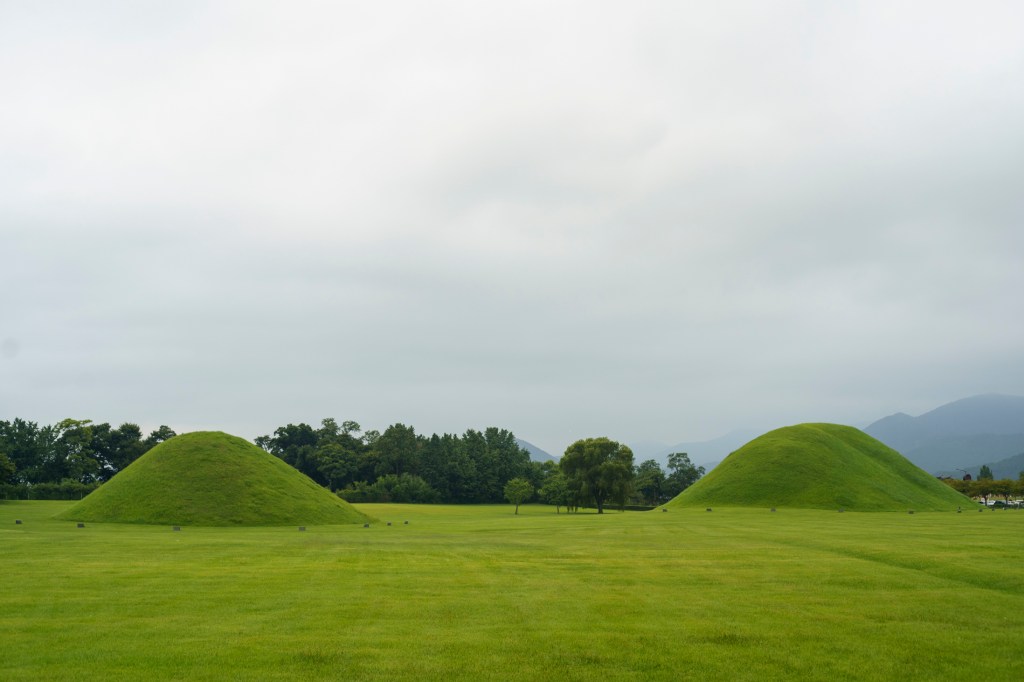
Visite classique mais émouvante des tombes du site de Daereungwon, notamment celle du Cheval Céleste. Balade jusqu’à l’observatoire puis retour au hanok sous une petite pluie.
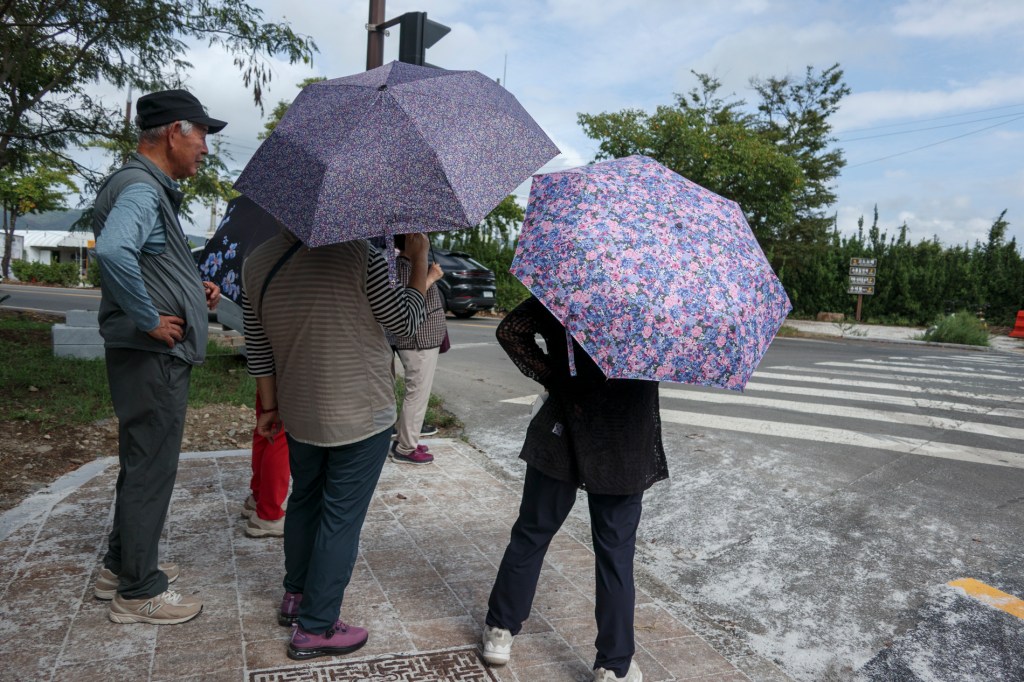
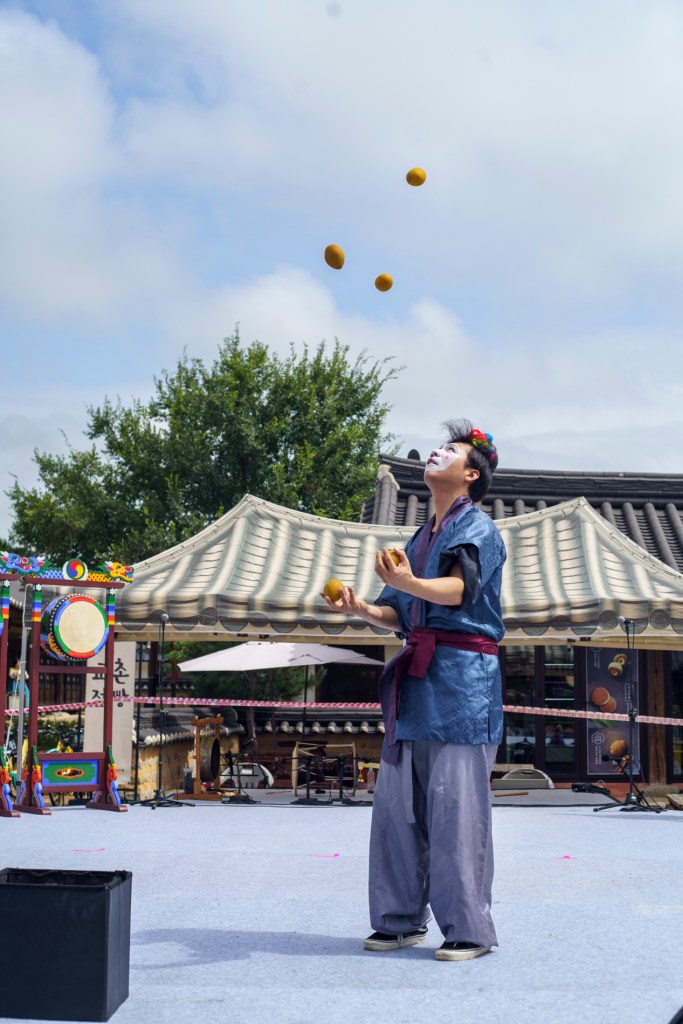
Le soir, cérémonie d’ouverture du Gyeongju World Heritage Festival sous la pluie – très bien organisé avec poncho fourni ! Mélange de musique traditionnelle coréenne et de réinterprétations modernes. Achat d’un grand parapluie noir au retour car le poncho ne suffisait plus!
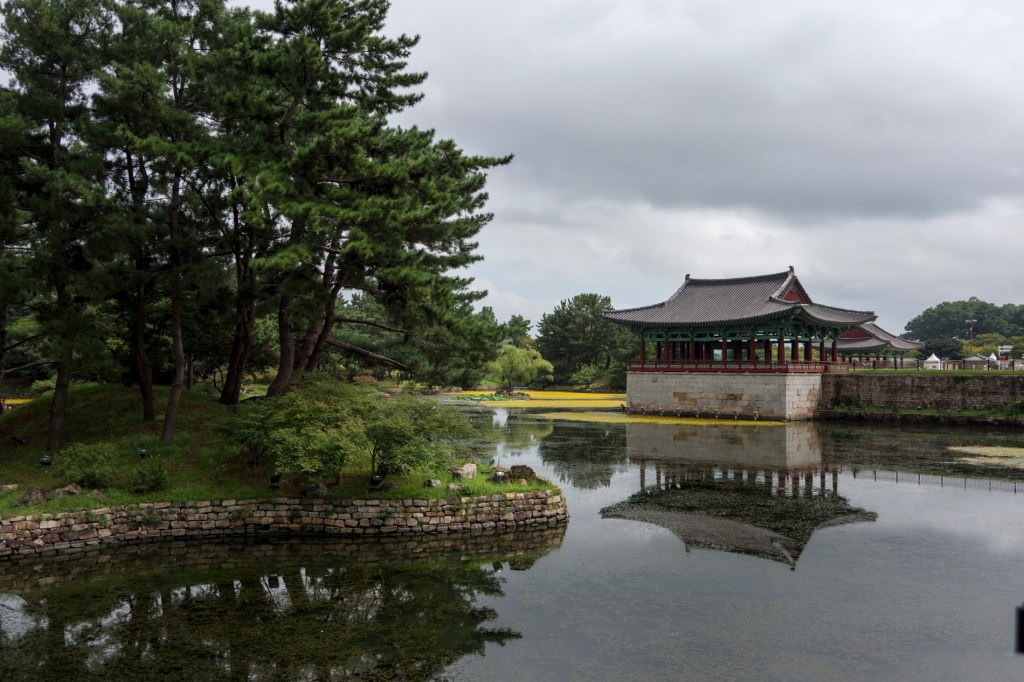
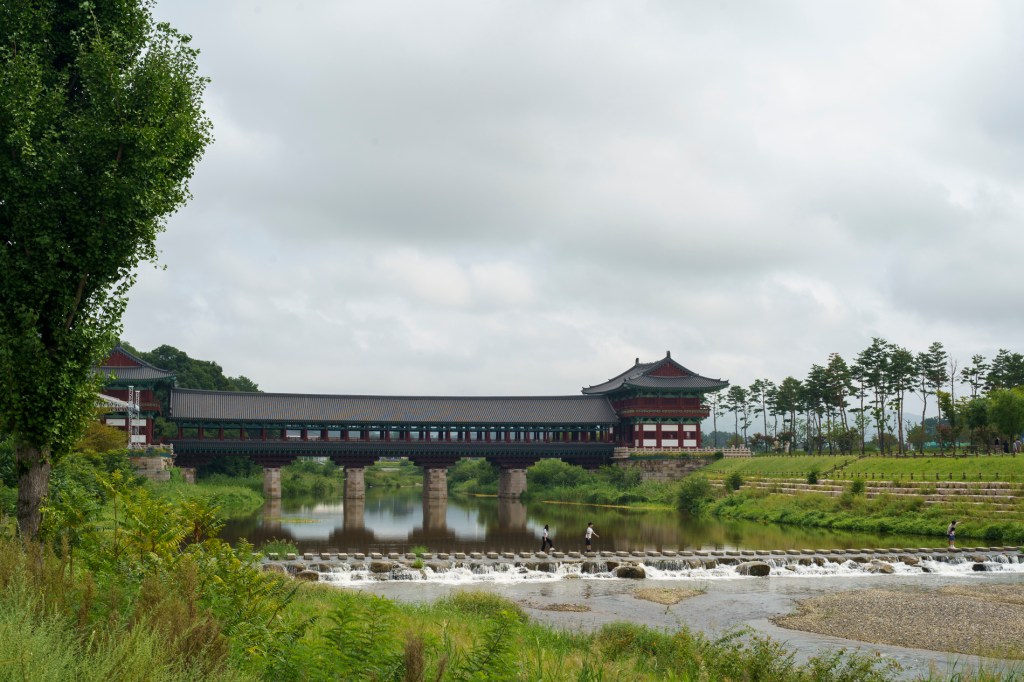
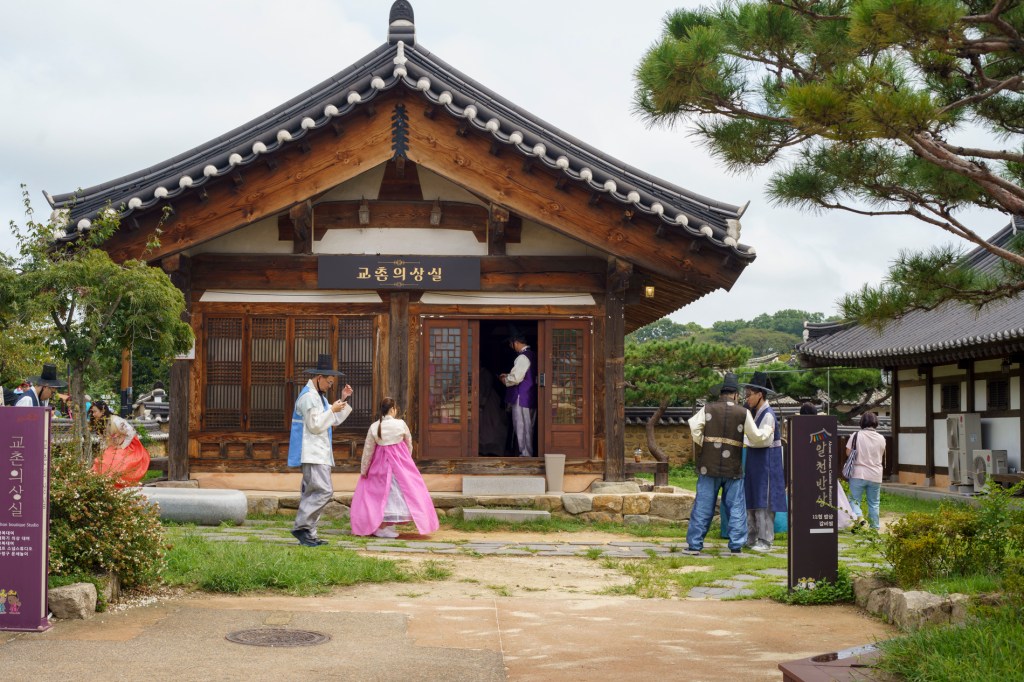
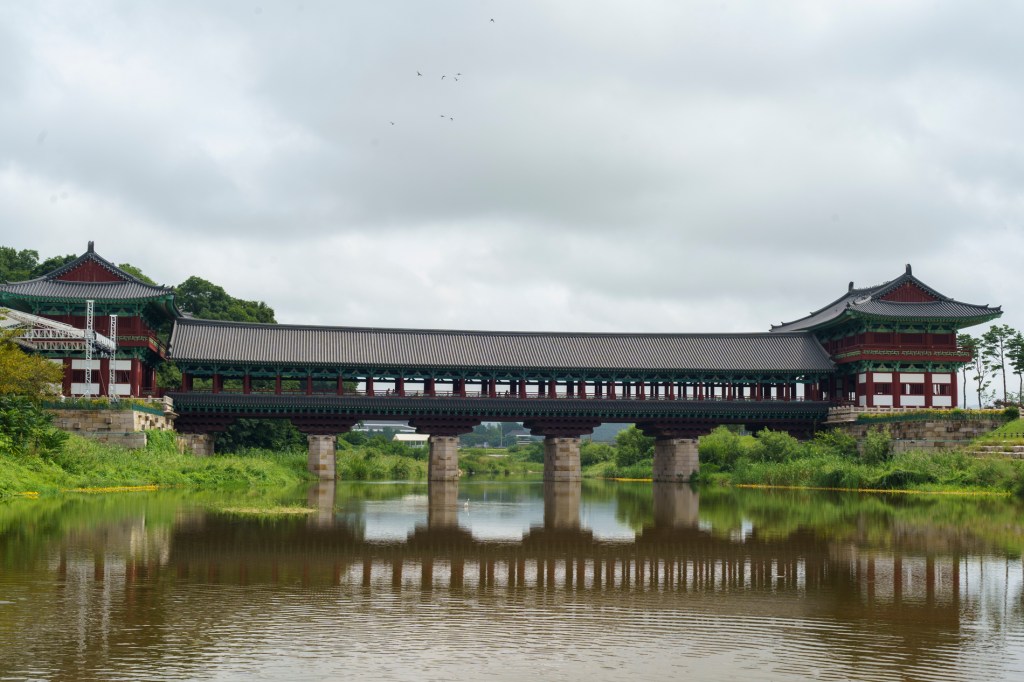
Dimanche : visite du pont Woljeonggyo où un gentil monsieur nous explique les différentes célébrations en cours, puis du palais Donggung.
Essai de portraits avec C. Pas concluant. J’avais imaginé des portraits sur fonds de couleurs vives avec un visage flou pour évoquer l’invisibilité des femmes de plus de 50 ans mais je ne suis plus sûre.
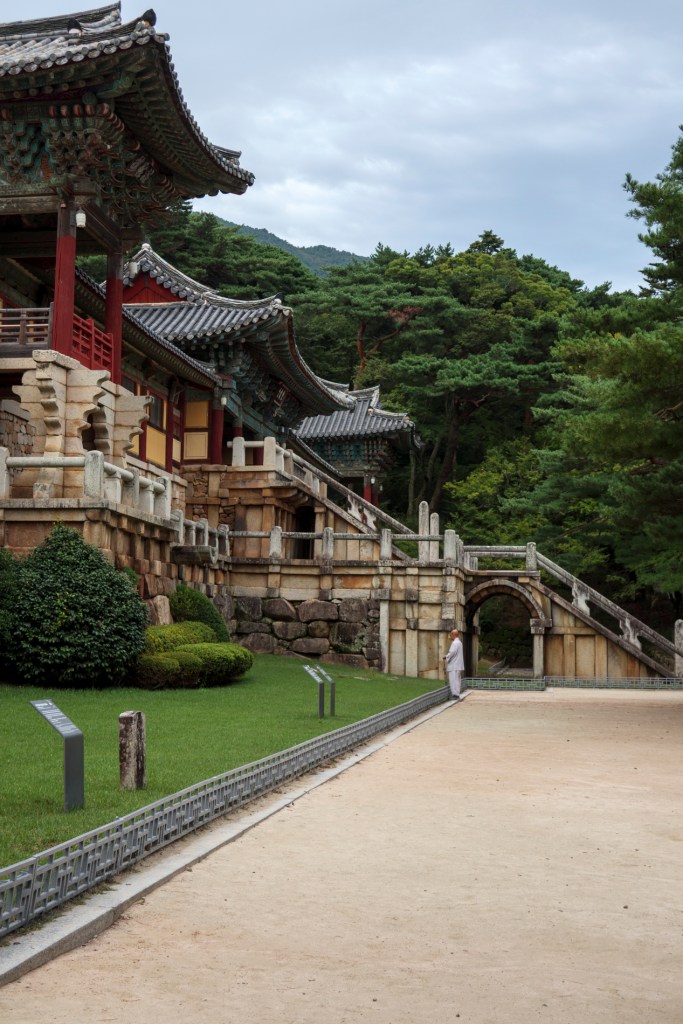
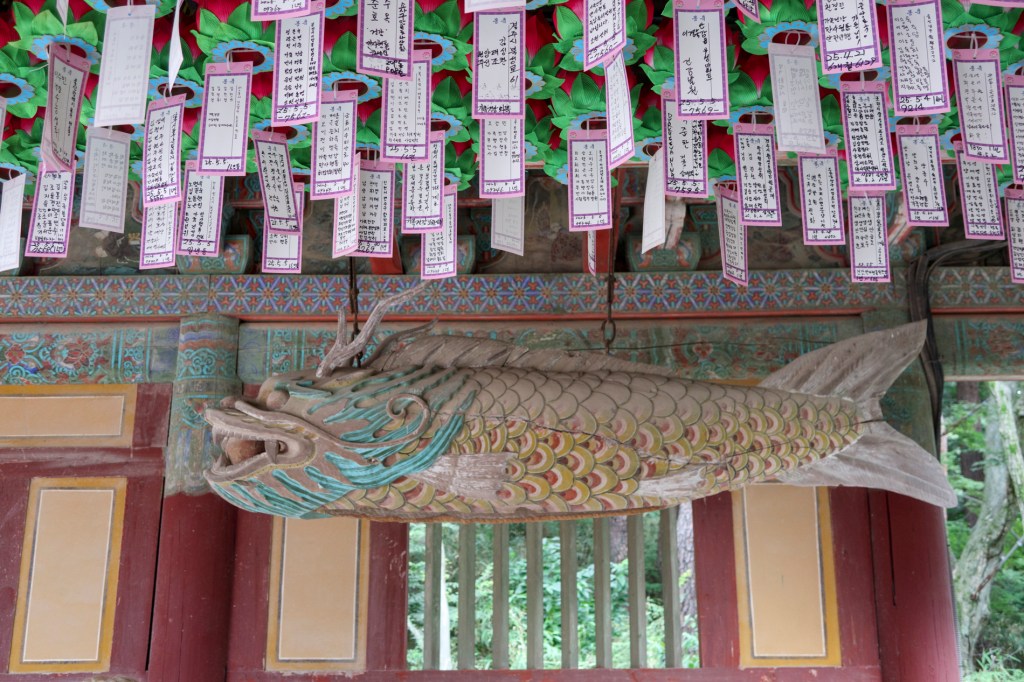
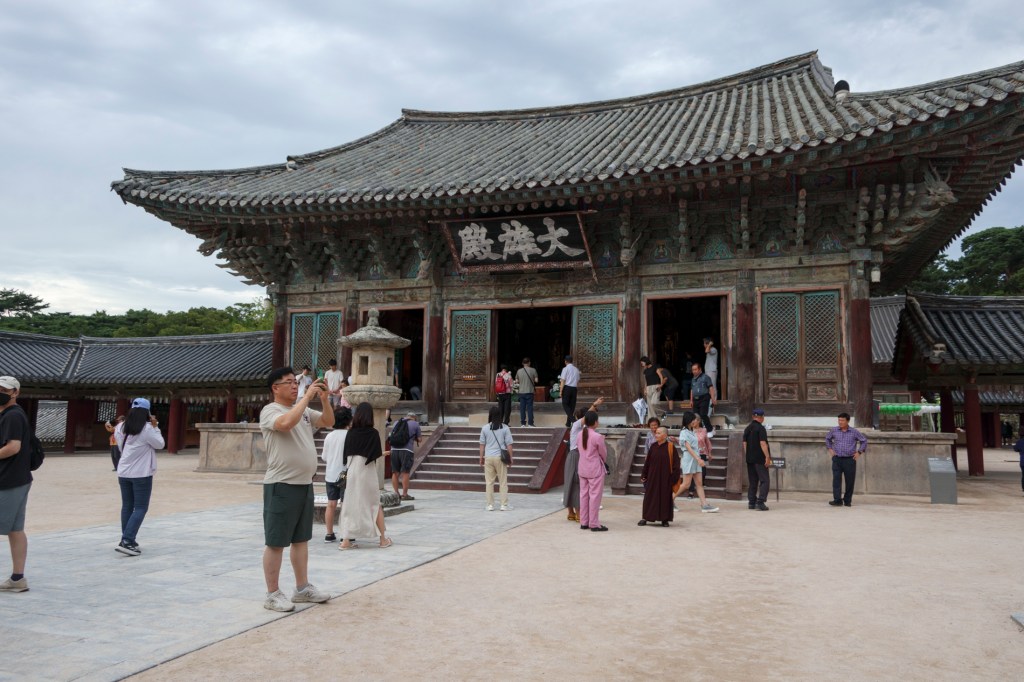
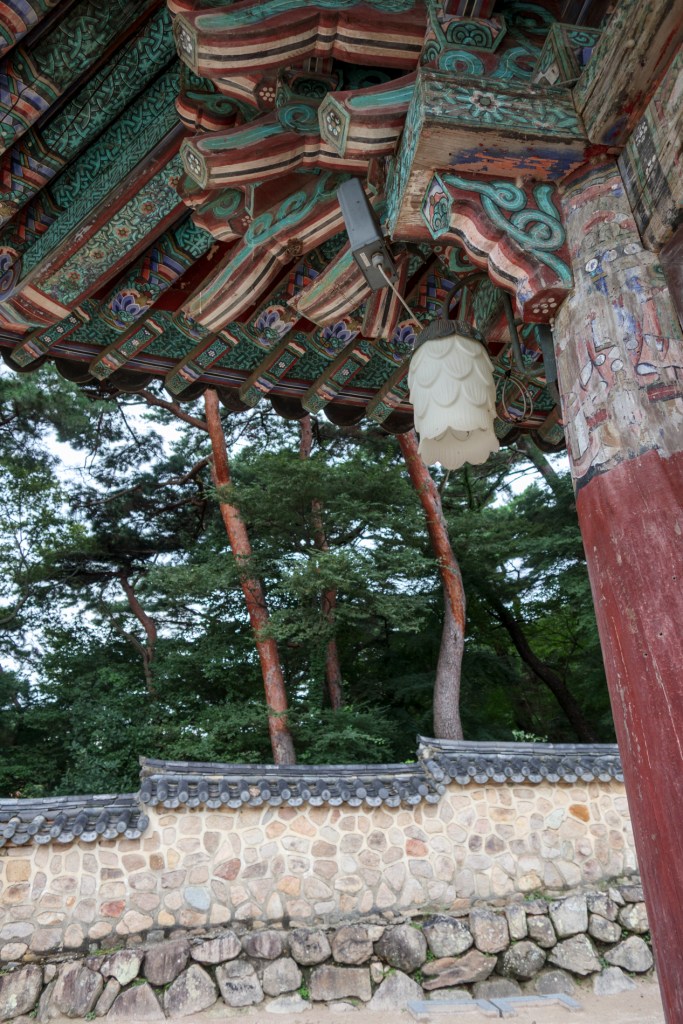
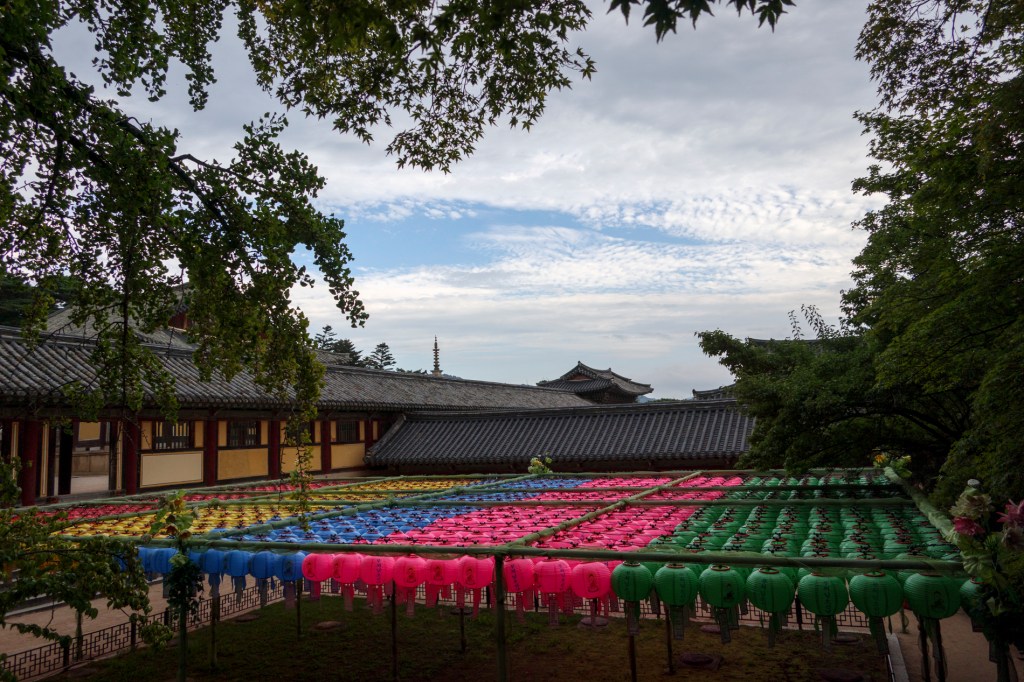
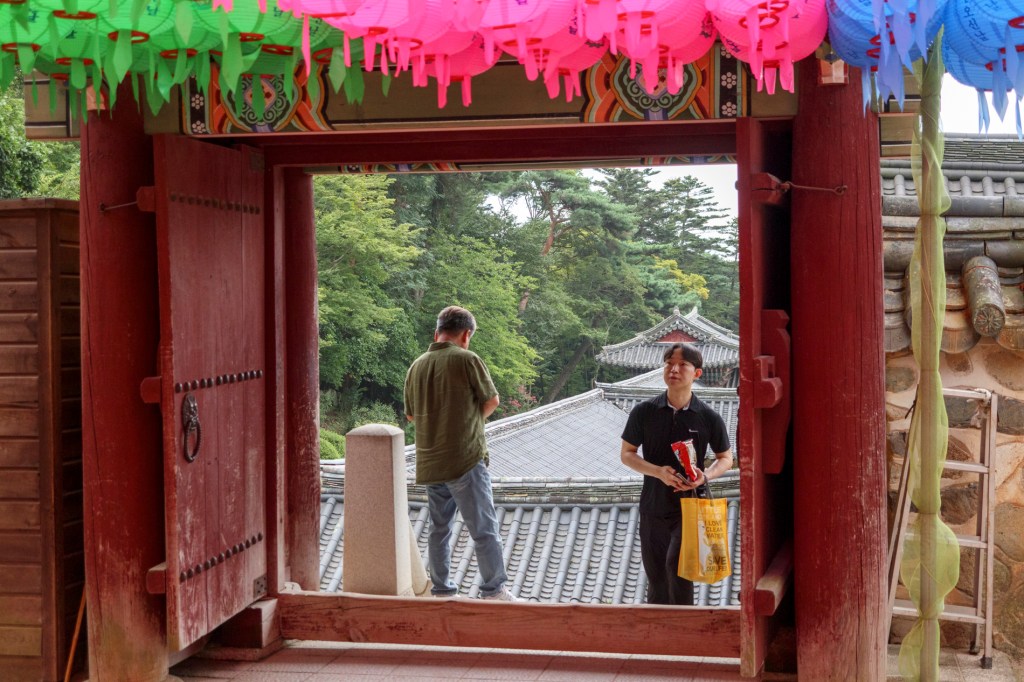
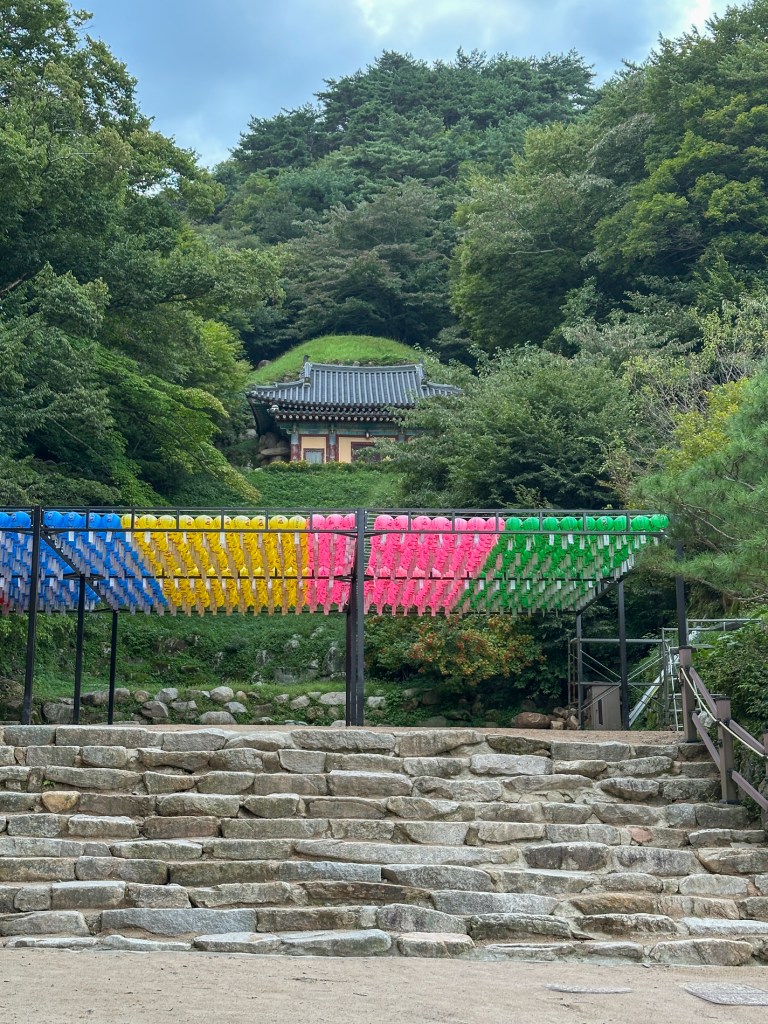
Départ pour le temple de Bulguksa avec pause déjeuner sur la route – soupe 칼국수 délicieuse dans un petit restaurant face au café Asa. Belle balade sur le site de Bulguksa, toujours magique, suivie de la visite de la grotte de Seokguram, à ne pas manquer.
Pohang et la côte
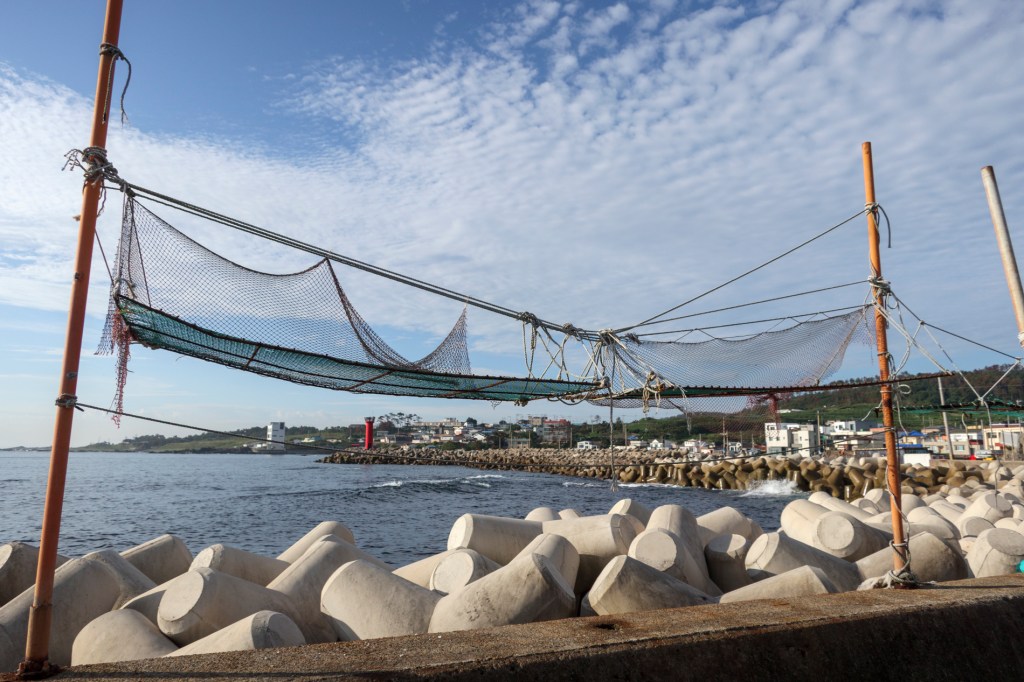
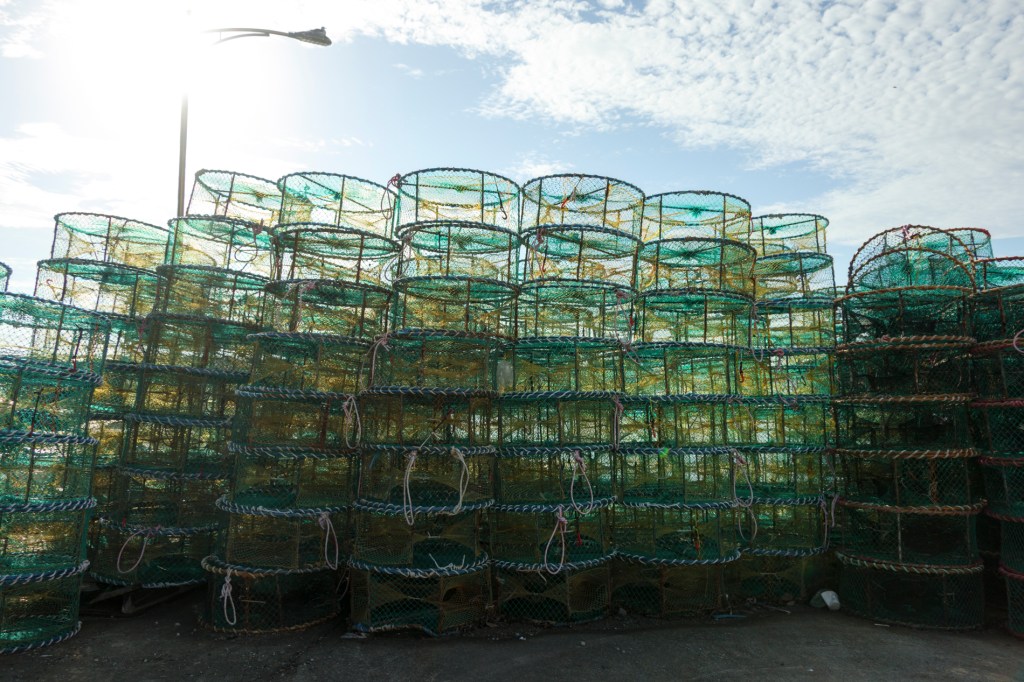
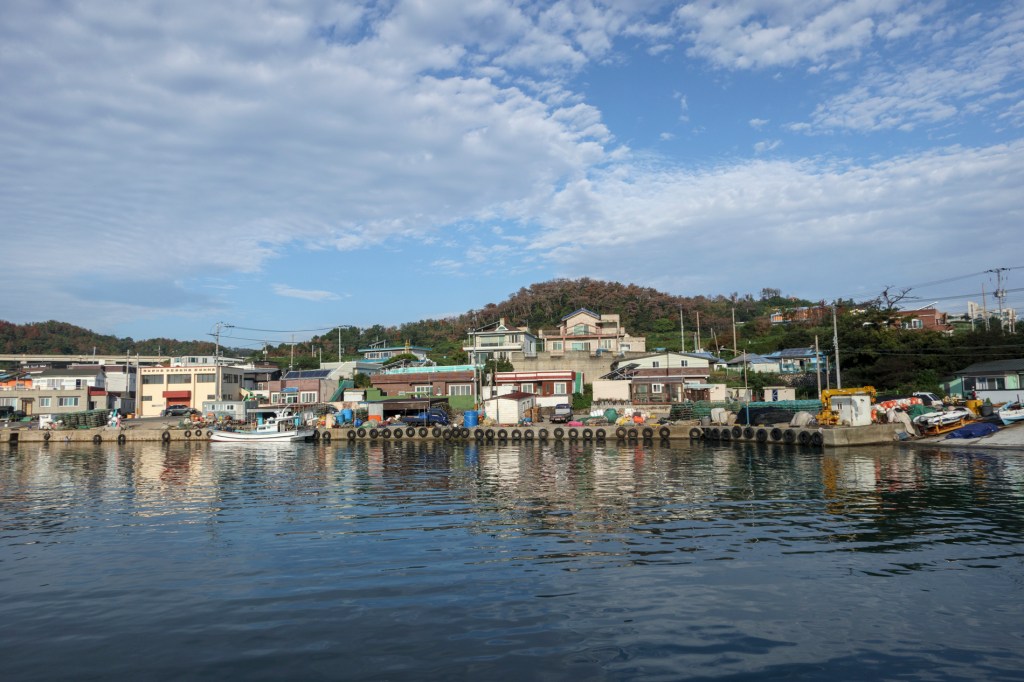
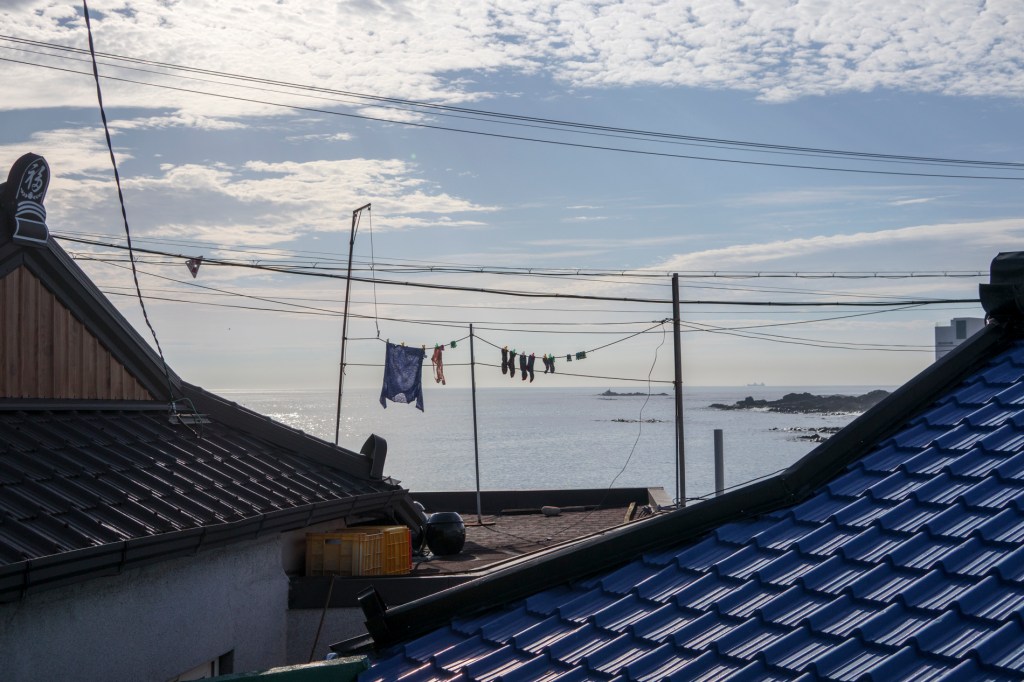
Ensuite, cap sur Pohang et un petit village côtier au nord de Guryongpo, rebaptisé “Hometown Cha-Cha-Cha” par Google Maps suite à la série éponyme (que je n’ai pas vue mais j’ai dormi face au phare !). Nous avons changé nos plans à la dernière minute car j’ai réalisé que C. voulait aller sur les traces de la série alors que j’avais prévu un hôtel au sud de Ulsan. Portraits de nuit en face du fameux phare rouge plus concluants.
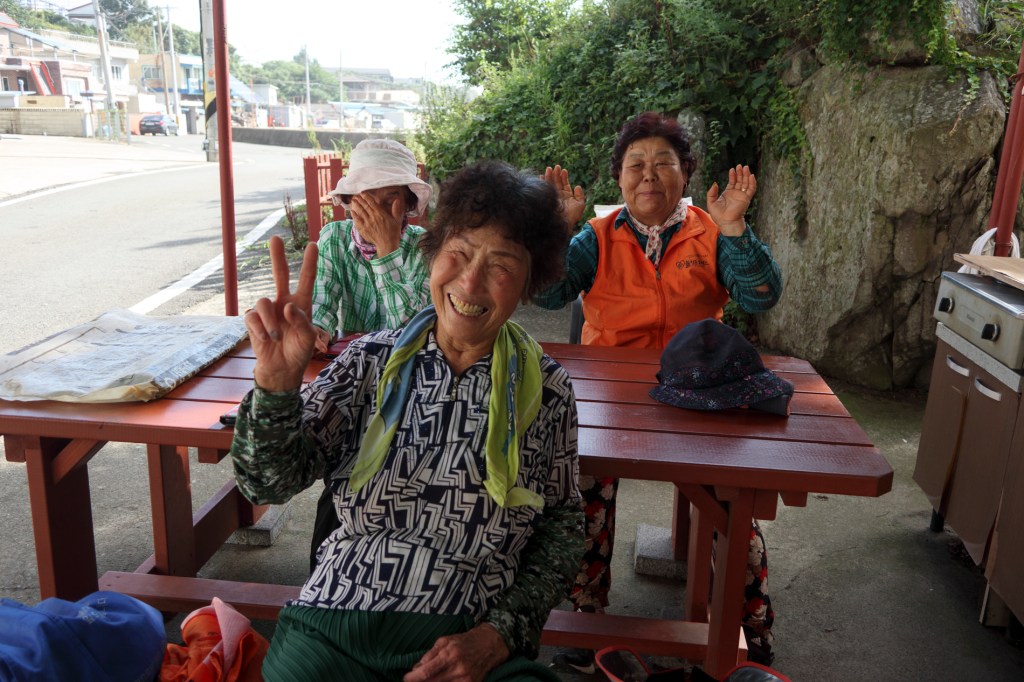
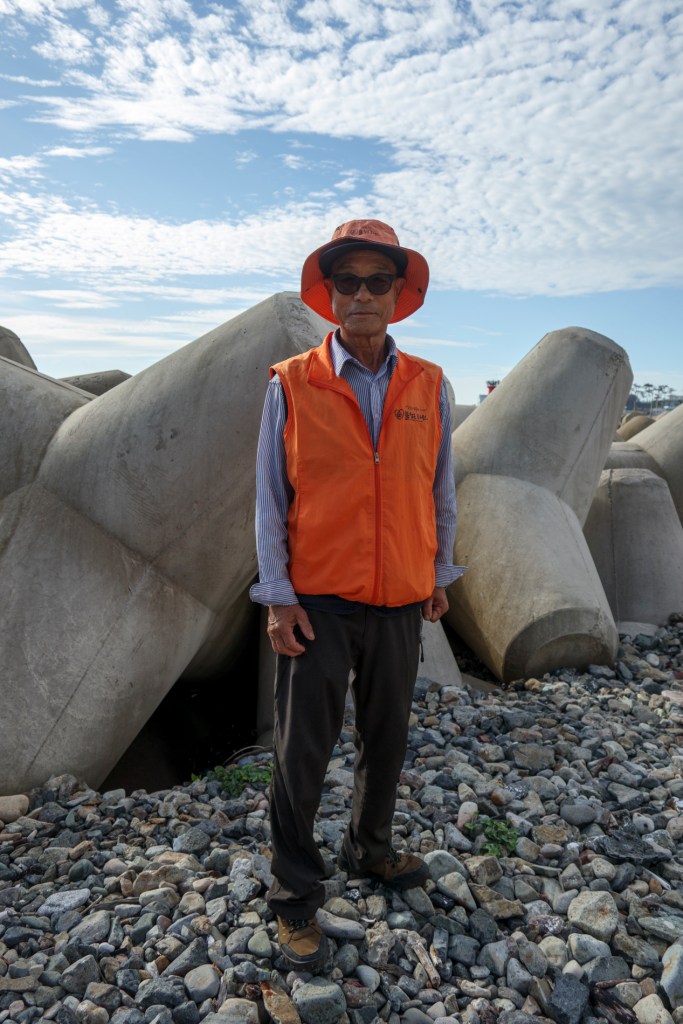
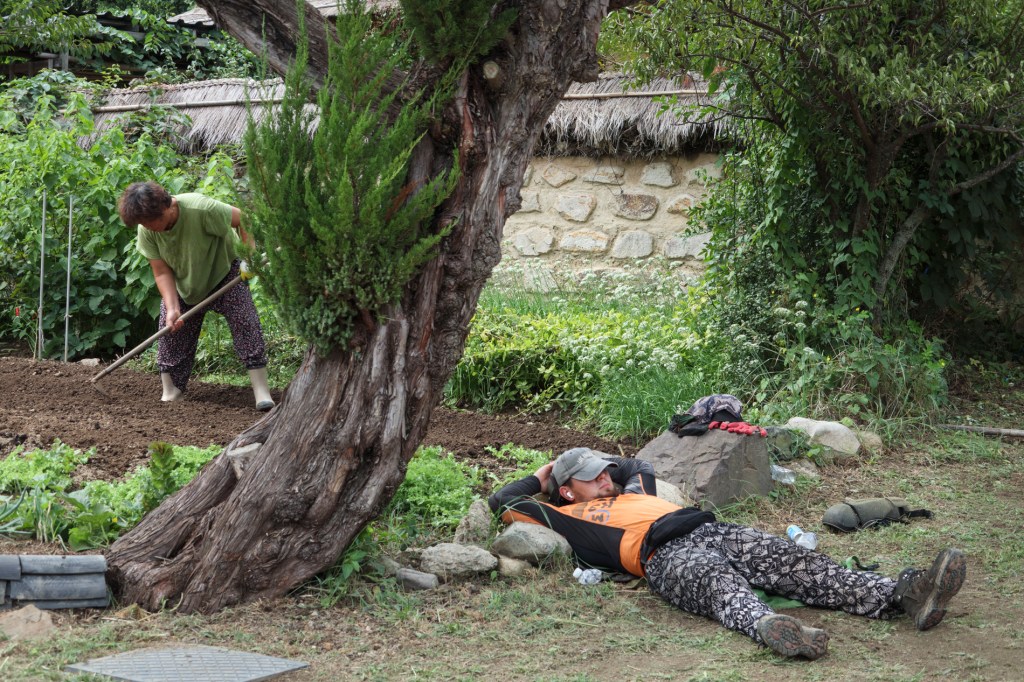
Rencontre marquante grâce à C. (qui se fait des amis en moins de 5 minutes) avec un groupe de personnes âgées ramassant les déchets sur la route et le port. Séance photo spontanée avec le responsable du groupe, puis petit café une fois le travail terminé.
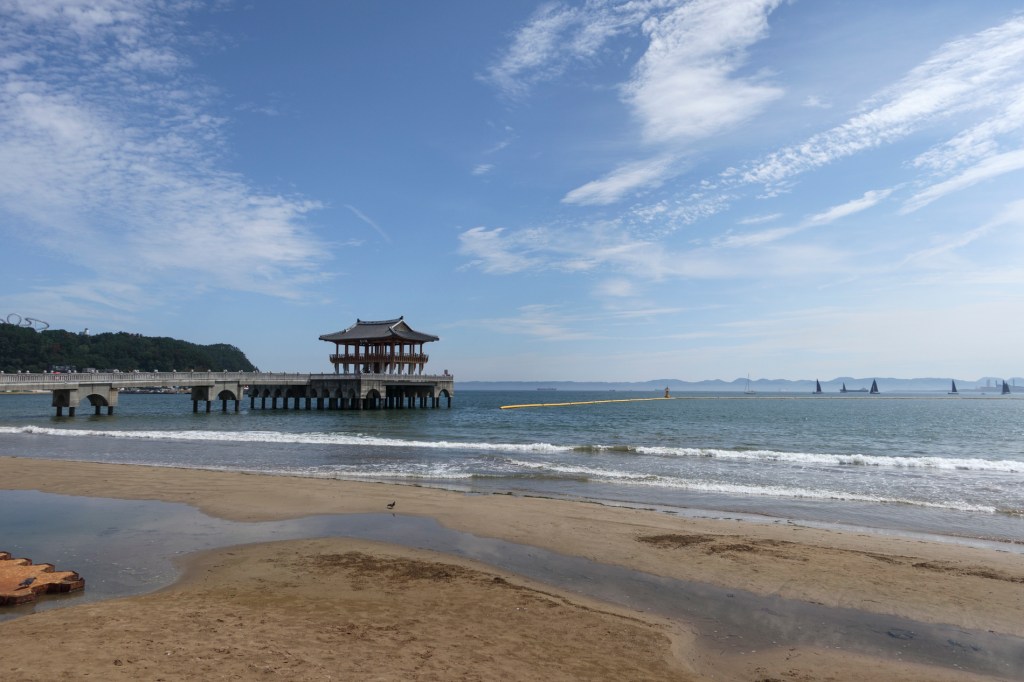
Trajet le long de la côte : très joli côté ouest, très industriel côté est. Arrêt à Homigot pour voir les deux mains géantes qui se font face, l’une dans l’eau, l’autre sur terre. Pause à Yeongildae Beach, petit pavillon au bout d’une jetée – encore un site pour fans de K-dramas sans doute, mais belle pause fraîcheur au milieu d’une journée moite.
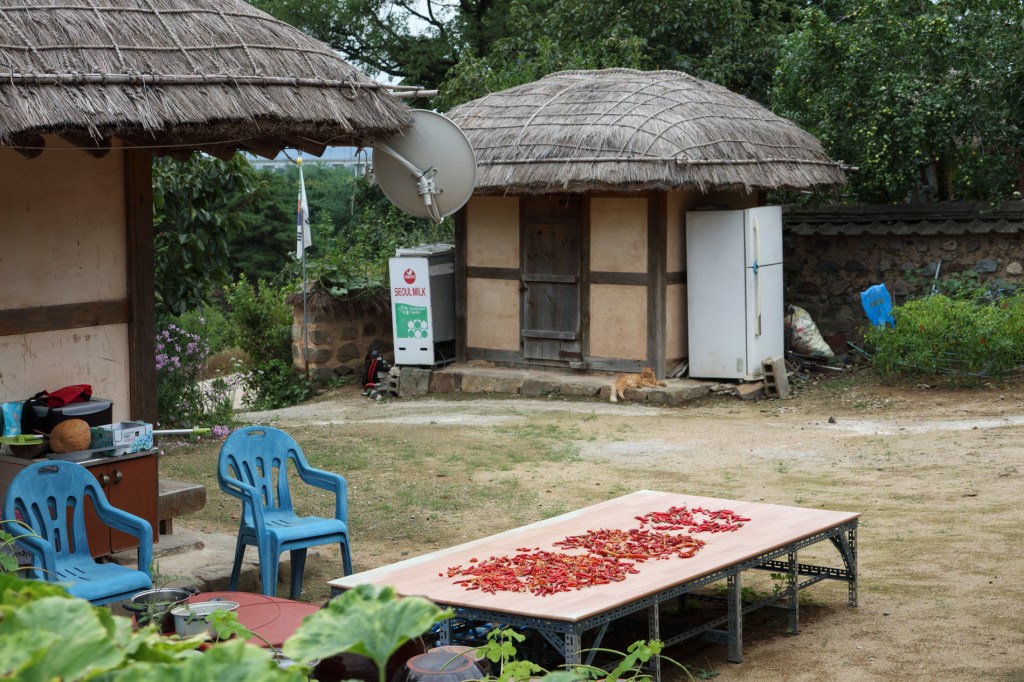
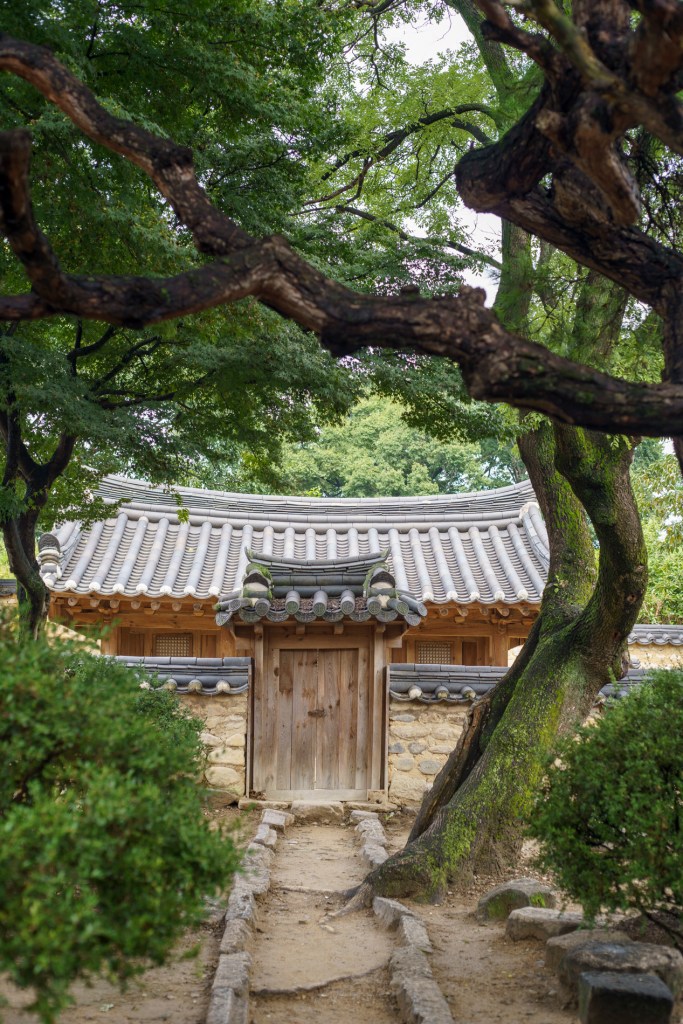
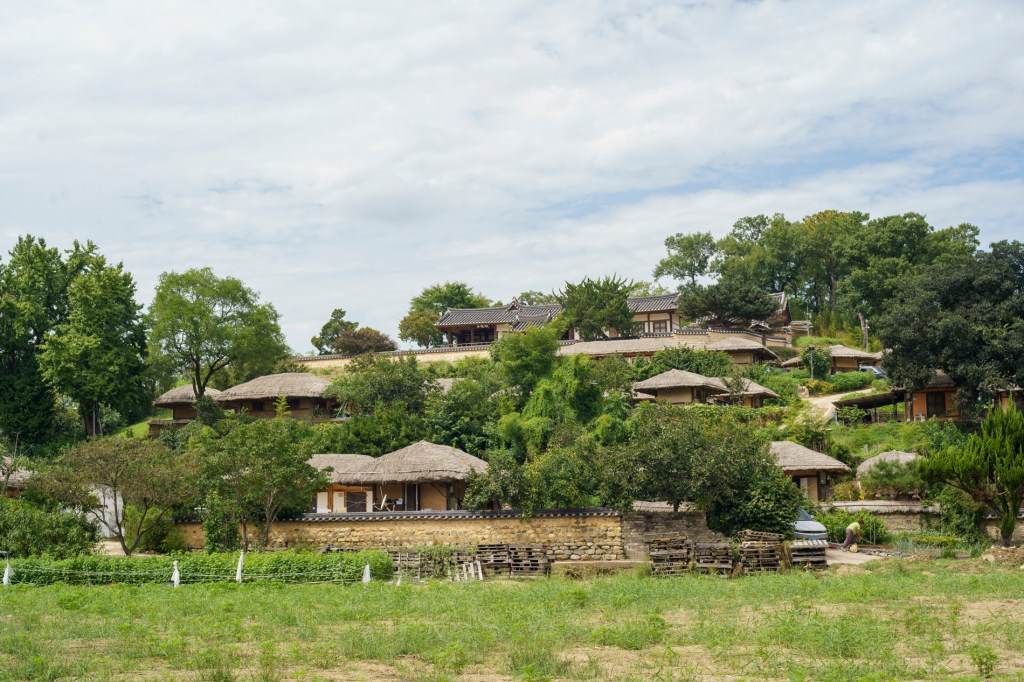
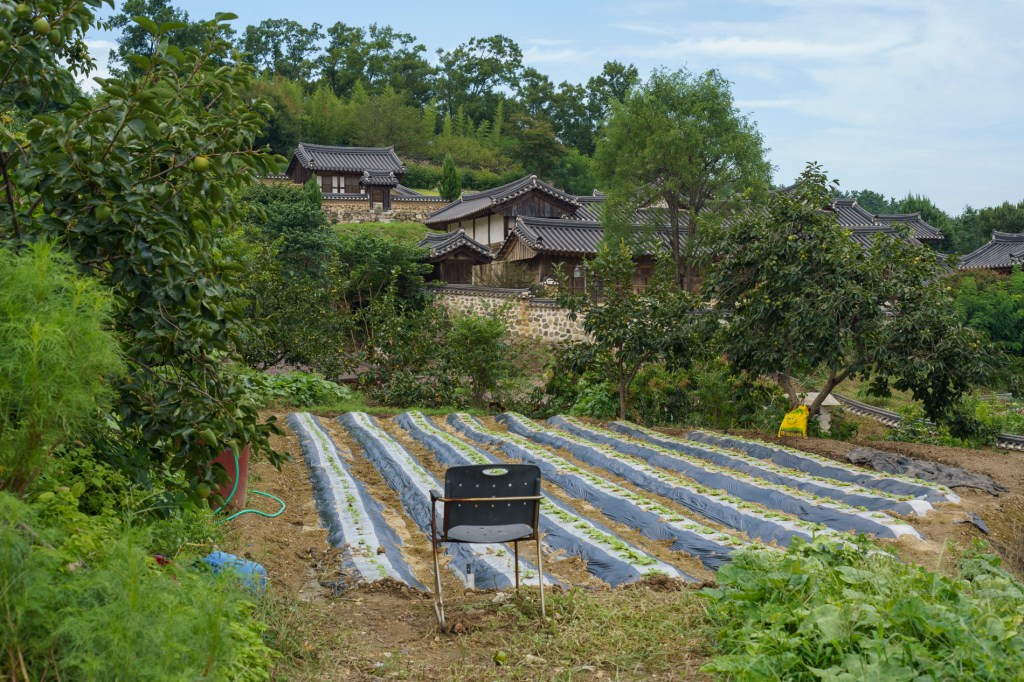
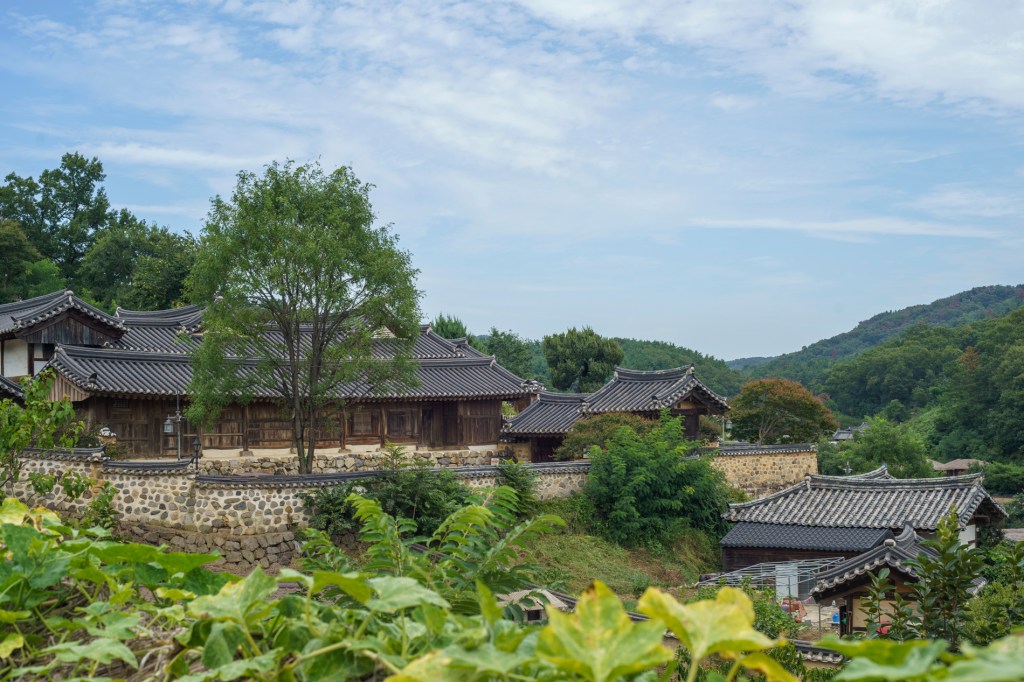
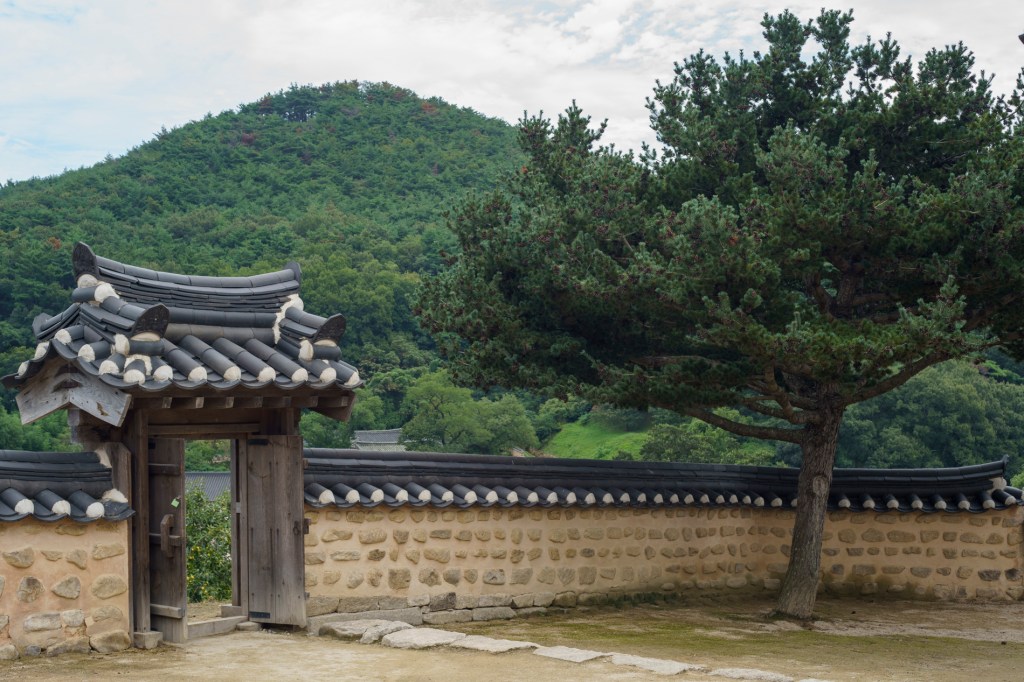
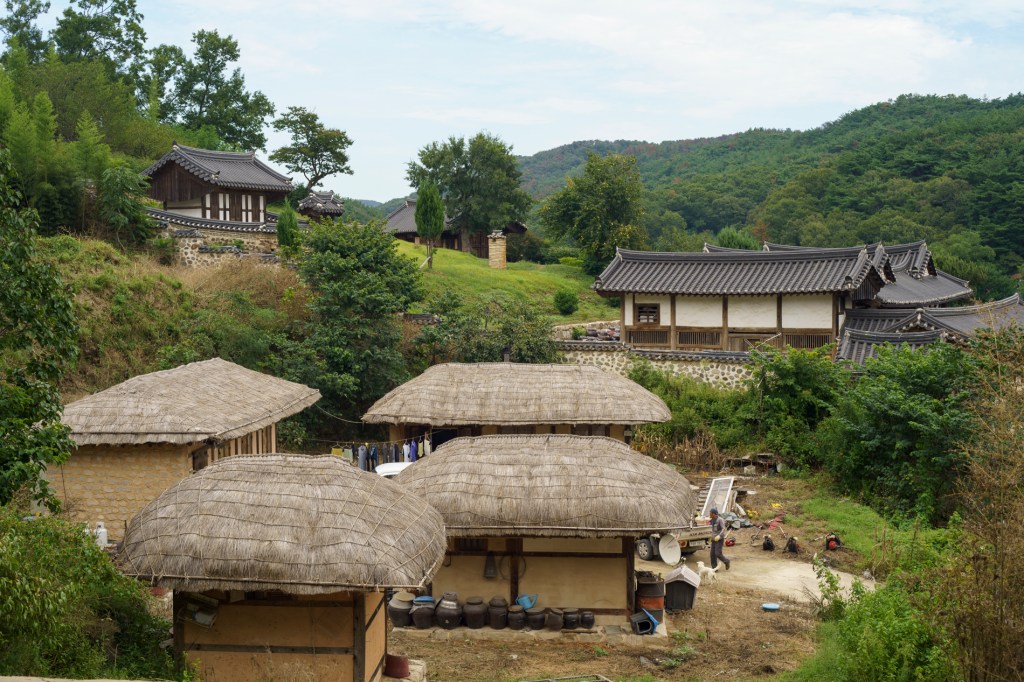
Puis visite du village traditionnel de Yangdong, classé UNESCO. Village clanique avec hanoks et maisons au toit de chaume, atmosphère étrange de musée habité par quelques personnes.
Retour précipité sur Busan pour rendre la voiture, suivi d’un plongeon bien mérité dans la mer.
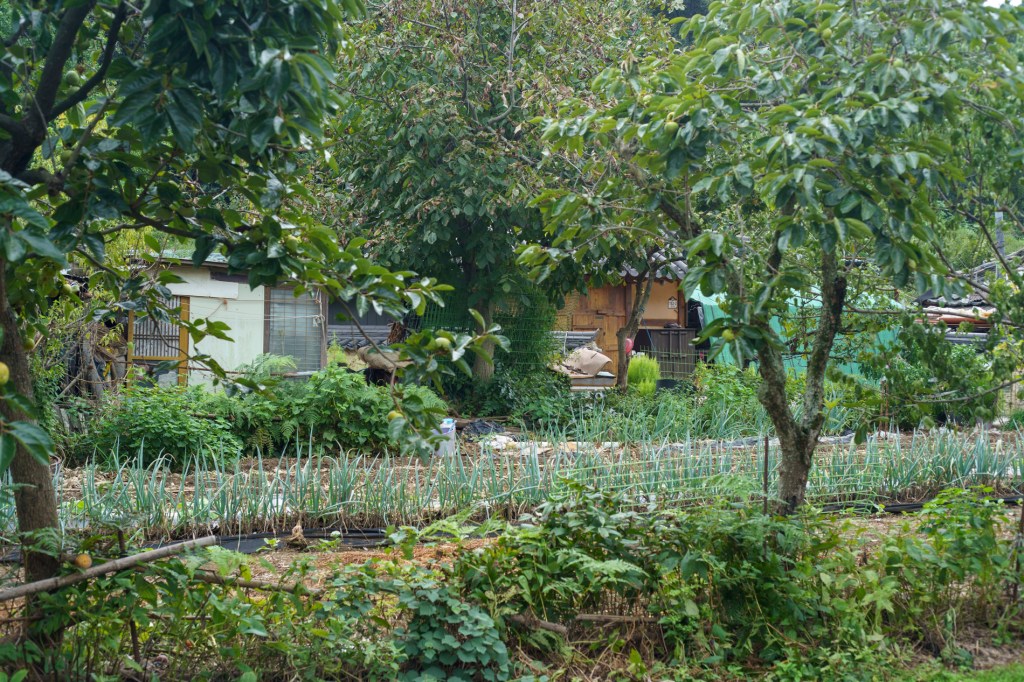
Réflexions photographiques
Cette semaine s’est révélée frustrante côté photo. Je n’arrivais pas au rendu que j’avais imaginé avec les portraits. Peut-être devrais-je me laisser porter par la personne que j’interviewe, ses intérêts et ses lieux “préféré” en Corée, car mon projet porte sur la relations que ces femmes entretiennent avec la Corée.
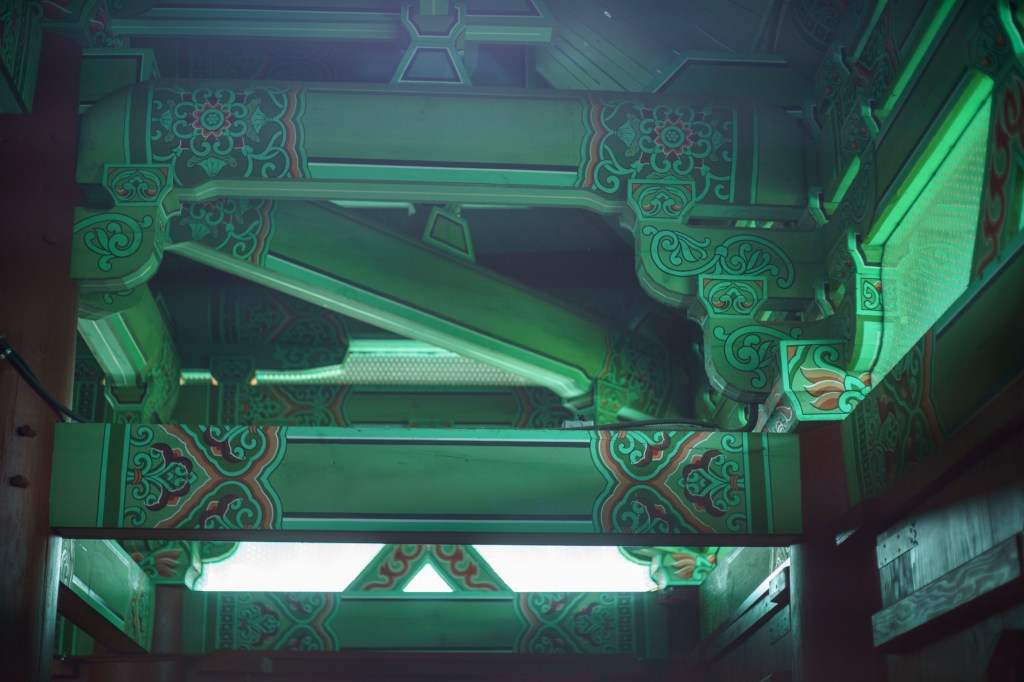
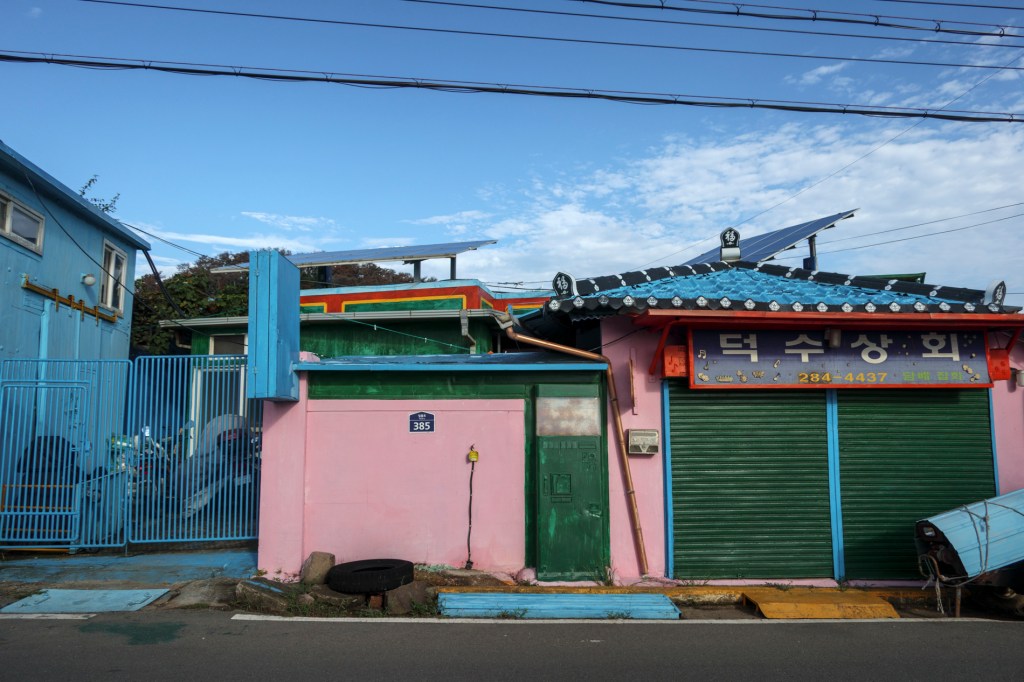
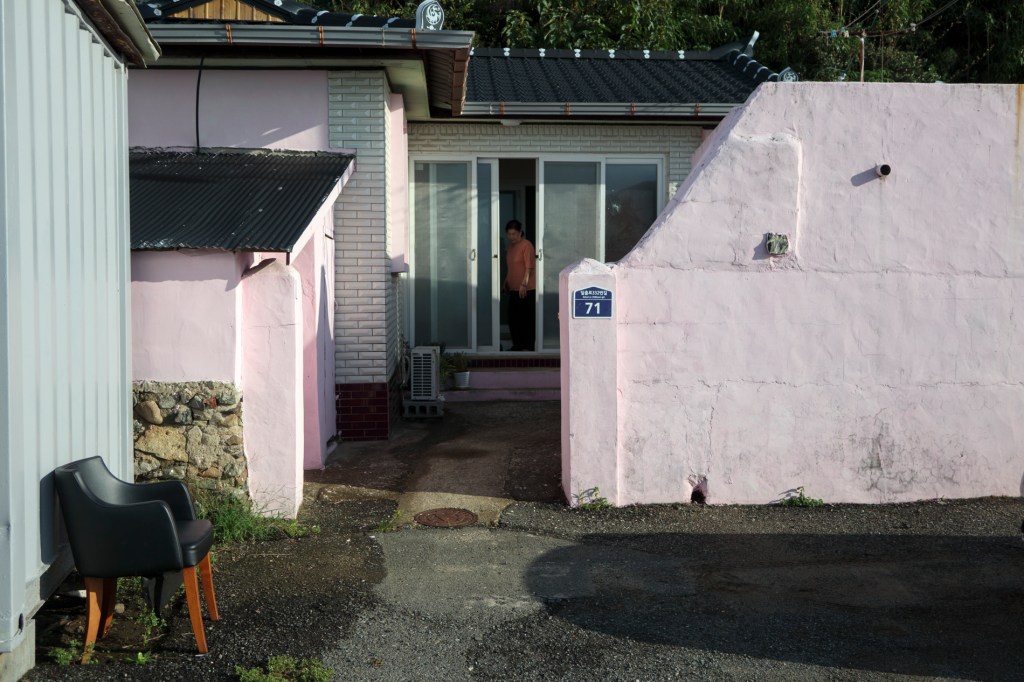
Personnellement, ce que je retiens de la Corée pour le moment, ce sont les couleurs, et cet étrange mélange d’extrême modernité et de tradition.
Je m’interroge, comment photographier une société elle-même fasinée par l’image ? Comme le dit Patrick Maurus dans son introduction au livre de Françoise Huguier, Virtual Seoul, « … la Corée est l’empire des images comme le Japon était celui des signes selon Roland Barthes, après la Chine, empire de l’écriture. La société en perpétuelle représentation. Des images qui montrent des images. »
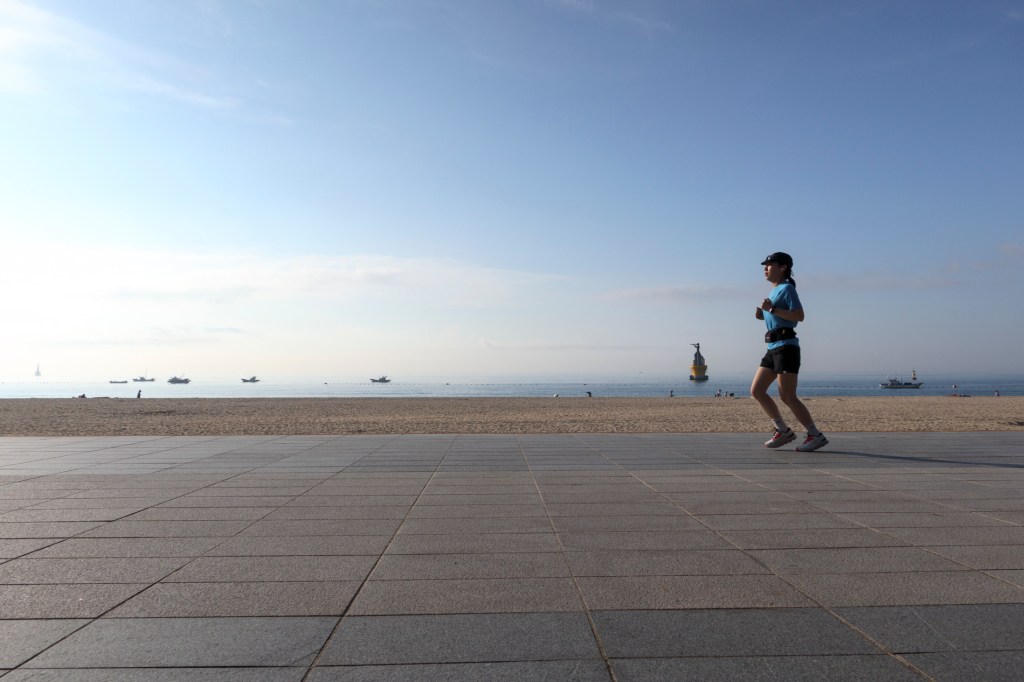
Ce matin, je suis allée nager sur plage de Haeundae. A un moment j’ai regardé vers la plage et j’ai vu un écran geant projeter une image pour une montre Rolex alors que juste devant moi se trouvait de petits bateaux de pêcheurs.
Et voilà une nouvelle semaine qui se termine ce lundi, riche en découvertes et en questionnements pour la suite de mon projet.
Week 37 – A week full of discoveries
I’m having trouble remembering everything I did this week because it was so packed: between visiting exhibitions in Busan and traveling to Daegu, Gyeongju, and Pohang, I feel like I’ve been to several different Koreas.
Cultural immersion in Busan
A quiet start to the week at the studio, where I listen back to the various interviews I conducted with the women I met before leaving. This audio material takes on a particular resonance here and makes me think about the images to put in dialogue with these thoughts.
Tuesday, visit to the Kukje Gallery in Busan and the F1963 exhibition space, where a duo of French artists are currently exhibiting. Then we head to the Busan Museum of Modern and Contemporary Art, housed in a former bank near the Jalgachi fish market and Busan Tower. The exhibition “Next Together” features duos of emerging artists. We chat with one of the artists after the visit. We are surprised that there are generally no openings open to the public as there are in Europe. Apparently, exhibitions’ openings are by invitation only, with galleries giving priority to their loyal collectors.
On Wednesday, we have lunch facing Songjeong Beach with the other residents and Anna, who runs the place, followed by a typical Korean dinner just below the residence. There’s nothing like discovering Korean cuisine with the locals.
Discovering Daegu
Thursday, departure for Daegu where C. joins me in the evening. Afternoon spent wandering around the Dongseong-ro district, shopping streets of little interest, except for a visit to the Ghost Books bookstore recommended by my friend D.
A surreal moment at Sparkland, an amusement park on a building’s rooftop in the heart of Daegu. Almost deserted at this time of the afternoon, it exuded a strange melancholy – I imagine it comes to life after dark.
The next morning, we explored the Bangcheon Market neighborhood and the street dedicated to singer Kim Kwang Seok, frequented mainly by Koreans. A touching moment: a team finalizing the floral arrangements for a wedding, delighted by our interest, asked us to pose in front of their creation.
After a sumptuous lunch at 도도모, we visited the Kansong Art Museum (a private collection with magnificent pieces of calligraphy, ceramics, and paintings) and then the Daegu Art Museum, where I discovered the Korean artist Lee Kang So.
Art in the city
A fascinating discovery: in the underground passage connecting the subway near the Daegu Grand Hotel, the city council has set up galleries to showcase artists. At 7 p.m., the artists give presentations—I act as an extra given my level of Korean! But I watch the passersby, especially those walking on the pebble path laid out in the middle of the gallery. Subway – art – healthy walk: what a trio.
After the presentations, dinner at a restaurant specializing in 감자탕 (pork spine stew) – delicious and comforting, despite the heavy air conditioning that made me regret not to have taken a sweater.
Gyeongju, between tradition and tourism
On Saturday, we picked up the car at the Lotte parking lot and headed for Gyeongju. I hadn’t realized that it would be Saturday in a hyper-touristy city, and finding a parking spot was a hassle, but we made it to our hanok in a tiny street close to the park.
We had a classic but moving visit to the tombs at the Daereungwon site, particularly the Celestial Horse Tomb. We walked to the observatory and then returned to the hanok in light rain.
In the evening, we went to the opening ceremony of the Gyeongju World Heritage Festival in the rain – very well organized with ponchos provided! A mix of traditional Korean music and modern reinterpretations. Bought a large black umbrella on the way back because the poncho wasn’t enough!
Sunday: visit to Woljeonggyo Bridge, where a kind gentleman explained to us the various celebrations taking place in the area, then we headed towards Donggung Palace.
On the way, I tried taking portraits of C – not conclusive. I had imagined making blurry portraits in a front of brightly colored backgrounds to evoke the invisibility of women over 50, but I’m no longer sure.
Departure for Bulguksa Temple with a lunch break en route – delicious kalguksu soup in a small restaurant opposite Asa Café. A lovely stroll around the Bulguksa site, which is always magical, followed by a visit to Seokguram Grotto, a pleasant stroll.
Pohang and the coast
Next, we headed to Pohang, to a small fishing village north of Guryongpo beach, renamed “Hometown Cha-Cha-Cha” by Google Maps following the eponymous series (which I haven’t seen, but I did sleep opposite the lighthouse!).
We changed our plans at the last minute because I realized that C. wanted to follow in the footsteps of the series, whereas I had booked a hotel south of Ulsan. Night portraits in front of the famous red lighthouse were more successful.
Thanks to C. (who makes friends in less than five minutes), we had a memorable encounter with a group of elderly people picking up trash on the road and at the port. We had a spontaneous photo shoot with the group leader, and then a quick coffee once the work was done.
We then drove along the coast: very pretty on the west side, very industrial on the east side, and stopped at Homigot to see the two giant hands facing each other, one in the water, the other on land.
After that we drove through the industrial town of Pohang, to Yeongildae Beach with a small pavilion at the end of a pier – another site for K-drama fans, no doubt, but a nice refreshing break in the middle of a hot and humid day.
Then we headed towards to the traditional village of Yangdong, a UNESCO World Heritage Site. A clan village with hanoks and thatched-roof houses, with a strange atmosphere between museum and countryside village.
We had to hurry back to Busan to return the car, through numerous highway tunnels, followed by a well-deserved dip in the sea.
Photographic thoughts
This week has been frustrating in terms of photography. I couldn’t achieve the look I had imagined for the portraits. Perhaps I should just follow the vibe of the person I am interviewing, because this project is about their relationships with Korea.
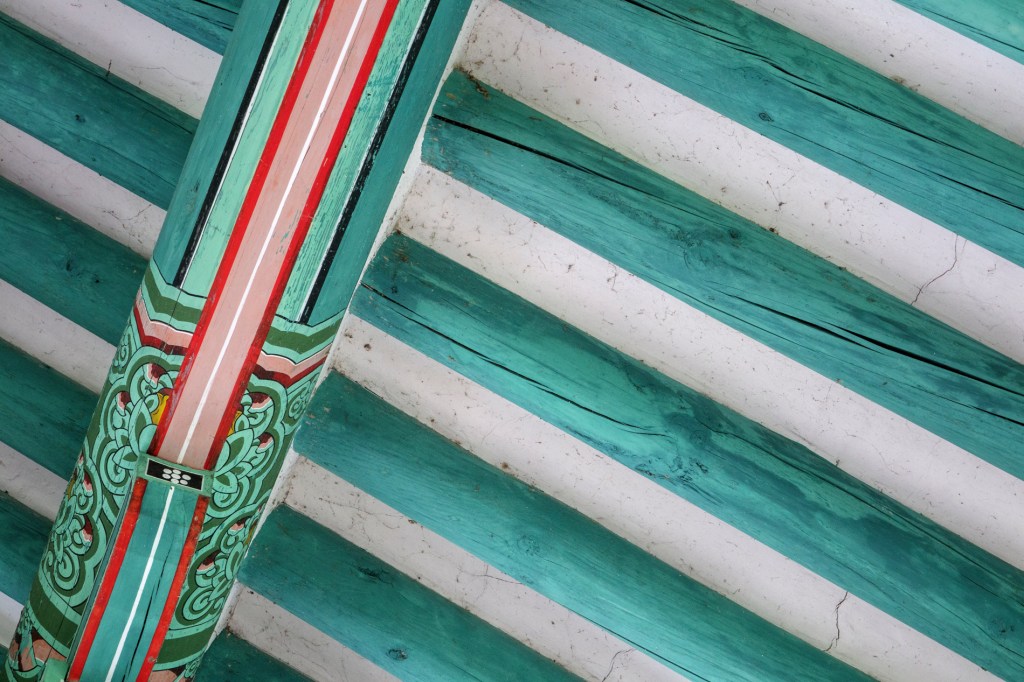
Visually, what strikes me about Korea at the moment are the colors and the strange mix of extreme modernity and tradition.
I wonder how to photograph a society that is itself fascinated by images. As Patrick Maurus says in his introduction to Françoise Huguier’s book, Virtual Seoul, “… Korea is the empire of images, just as Japan was the empire of signs, according to Roland Barthes, after China, the empire of writing. A society in perpetual representation. Images that show images.”
This morning, I went swimming at Haeundae Beach. At one point, I looked towards the beach and saw a giant screen with an ad for a Rolex watch, while right in front of me were small fishing boats, strange contrast I thought.
 Korean_Puzzle
Leave a comment